

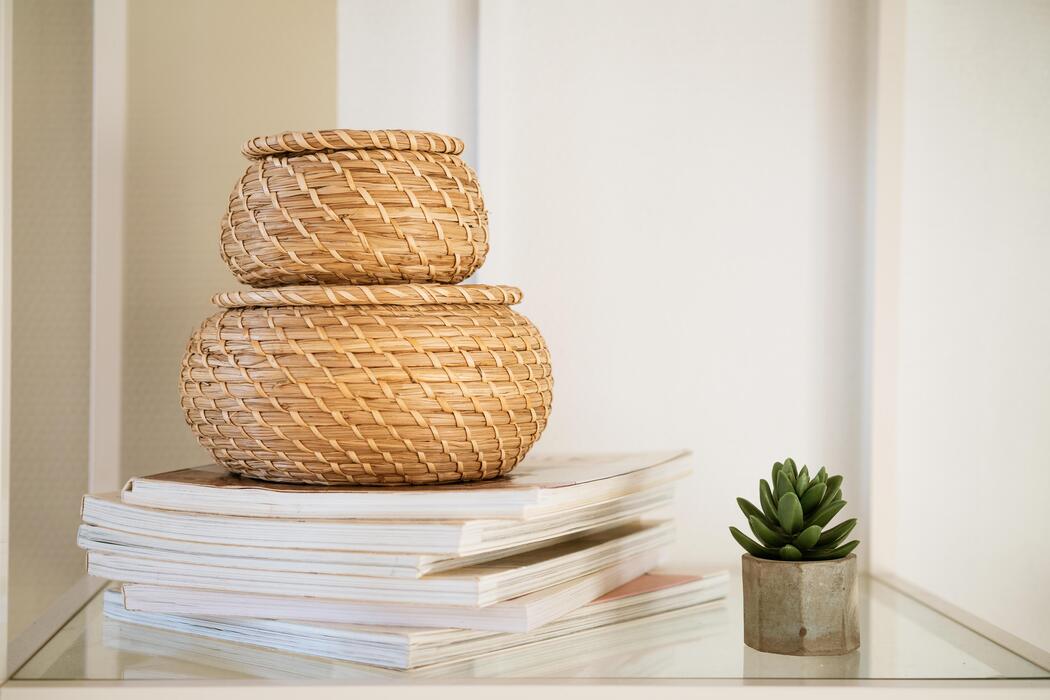
Water Hyacinth Baskets: Why Natural Woven Storage Belongs in Every Room
Water hyacinth baskets occupy a rare category in home accessories: they are genuinely functional, visually beautiful, and made from a sustainable natural material that improves with use. The woven texture of water hyacinth adds warmth and organic character to any room it's placed in, and the lidded version transforms what's inside from storage into something that looks intentionally displayed.
This guide covers everything about water hyacinth baskets — what makes the material distinctive, how lidded versus open baskets function differently, the rooms and applications where they work best, and the care habits that extend their life.

What Is Water Hyacinth?
Water hyacinth (Eichhornia crassipes) is an aquatic plant native to South America that grows rapidly on the surface of freshwater lakes and rivers. As a basket material, the dried stems are woven into a range of textures — from fine, tightly woven surfaces that are nearly smooth, to coarser weaves with more visible structure.
As a home accessory material, water hyacinth has specific properties:
• Natural warmth: the dried plant material has an inherent warm tone — somewhere between honey and natural straw — that sits in the same color family as linen, jute, and natural wood. It integrates easily with any neutral interior palette.
• Lightweight strength: woven water hyacinth is significantly lighter than rattan or seagrass of comparable size, while maintaining substantial structure. This makes larger pieces easier to move and reposition.
• Woven texture: the surface texture of a water hyacinth basket catches and diffuses light in a way that smooth surfaces don't. This visual texture is one of its most valuable decorative qualities.
• Environmental context: water hyacinth grows aggressively and is considered invasive in many ecosystems. Harvesting it for basket-making is an environmental positive — the plant is used rather than simply managed as a nuisance.
Lidded vs. Open: The Functional Difference
The lid is what separates a decorative basket from a storage solution. A lidded water hyacinth basket contains mess, creates a finished surface, and elevates whatever is inside into something that reads as organized rather than stored.
|
Format |
Best Use |
Visual Effect |
Ideal Rooms |
|
With lid |
Concealed storage, bedroom essentials, linen storage |
Clean, finished top surface — displays as an object |
Bedroom, living room, bathroom |
|
Open, deep |
Throw blanket storage, magazine storage, plant pot cover |
Contents visible — choose visually interesting fills |
Living room, entryway, reading nook |
|
Open, shallow / tray |
Display, counter organization, catch-all |
Contained but visible arrangement |
Kitchen, bathroom, console table |
|
Handled / portable |
Laundry, transport, picnic use |
Functional emphasis |
Utility spaces, laundry, outdoor |
Room by Room: Where Water Hyacinth Baskets Work Best
• Living room: a large lidded water hyacinth basket beside the sofa holds throw blankets, extra pillows, or children's toys without the visual noise of open storage. At this size the basket is a furniture-scale piece that contributes to the room's texture budget.
• Bedroom: a medium lidded basket on a dresser or at the foot of the bed contains extra linens, seasonal blankets, or clothing overflow. The warm woven surface reads as intentional rather than makeshift.
• Bathroom: a small water hyacinth basket on a bathroom shelf or counter holds rolled towels, spare toiletries, or bath accessories. The organic texture in a bathroom with otherwise hard surfaces introduces warmth immediately.
• Kitchen: a shallow water hyacinth tray on the kitchen counter corrals produce, small appliances, or counter essentials. The natural material pairs beautifully with travertine, wood, and ceramic — the most common kitchen materials.
• Entryway: a deep open basket at the entry holds umbrellas, scarves, or shoes without the institutional quality of a plastic tray. The natural material reads as deliberately chosen rather than practical compromise.
|
The Basket-as-Plant-Cover Technique One of the most effective uses for a water hyacinth basket: place a nursery plastic pot directly inside. The basket becomes a decorative plant cover that completely conceals the functional container, adds texture, and lifts the plant's visual presence in the room. Size the basket so the plastic pot sits inside with 1" of clearance on each side. Choose a basket height that covers the pot but leaves the plant's crown and leaves visible above the rim. This works for any plant — from a small succulent in a 4" pot to a large fiddle-leaf fig in a 10" nursery container. |
Caring for Water Hyacinth Baskets
• Keep away from sustained moisture: water hyacinth is a natural material that will mold or deteriorate with prolonged exposure to water. It handles humidity fine, but don't leave it in a wet bathroom floor or expose it to standing water.
• Dust regularly: the woven texture traps dust. A soft brush attachment on a vacuum or a dry cloth run across the surface weekly maintains the basket's appearance and prevents buildup in the weave.
• Avoid direct extended sunlight: UV exposure causes natural materials to fade and become brittle over time. Position baskets away from windows that receive direct sun for extended periods.
• Reshape when damp: if a basket loses its shape — which rarely happens but can occur with heavy use — lightly dampen the surface and reshape by hand, then allow to dry completely in the correct shape.
Find water hyacinth baskets, home accessories, and decorative objects at S.W. Home — natural materials selected for their beauty and lasting quality.
|
Shop Natural Home Accessories at S.W. Home Woven baskets, natural home accessories, and decorative objects hand-picked for quality and lasting organic appeal. Browse the S.W. Home collection. |
