

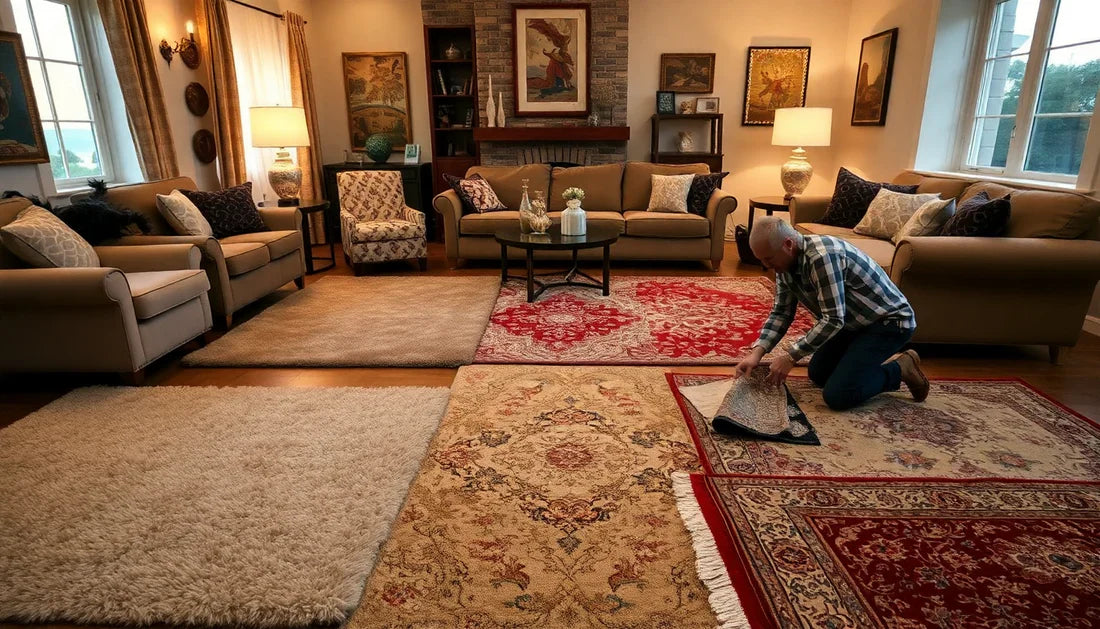
The Complete Guide to Home Rugs: Finding the Right Size and Style
A rug is one of the most powerful design tools in any room — and one of the most frequently gotten wrong. Too small and it makes the room feel unanchored and the furniture disconnected. The right size, in the right material, instantly defines a space, grounds furniture, and adds a layer of warmth and texture that no other element provides.
This guide covers the complete rug decision: how to size a rug for every room, which materials hold up and which don't, and how to choose a style that complements rather than competes.
The One Rule That Overrides All Others: Size Up
If there's a single piece of advice worth taking on home rugs, it's this: the rug you're considering is probably too small. Go up one size.
A rug that's too small makes furniture look like it's floating on an island of bare floor. A rug that's appropriately sized grounds the entire seating or dining arrangement and makes the room feel larger, not smaller — counterintuitively, more floor coverage creates the impression of more space.
Sizing by Room
|
Room |
Configuration |
Recommended Size |
Critical Rule |
|
Living room |
All legs on rug |
9×12 or 10×14 |
Best option — most unified look |
|
Living room |
Front legs on rug only |
8×10 or 9×12 |
Acceptable; all pieces still connected |
|
Living room |
No legs on rug |
Never recommended |
Rug looks like a mat — avoid |
|
Dining room |
Chairs on rug when pulled out |
At least 24" beyond table on all sides |
8×10 minimum for most dining tables |
|
Bedroom (queen) |
Extends 18–24" on sides + foot |
8×10 or 9×12 |
Nightstands can sit off rug |
|
Bedroom (king) |
Extends 18–24" on sides + foot |
9×12 or 10×14 |
Both nightstands ideally on rug |
|
Entryway / hallway |
Fits the space with 4–6" margin |
Runner: 2×8 or 3×10 |
Leave equal margins on both sides |
Material Guide: What Holds Up and What to Avoid
Rug material determines longevity, feel, and maintenance requirements more than any other factor. The right material for a space depends on traffic level, whether there are children or pets, and the aesthetic the room needs.
• Wool: the gold standard. Natural resilience means wool rugs bounce back from compression, resist staining naturally, and improve with age. Best for living rooms and bedrooms. Higher cost, worth it for long-term investment.
• Cotton: softer and more affordable than wool. Less resilient — cotton rugs flatten under furniture over time. Works well in low-traffic rooms and as layering pieces. Machine-washable options exist.
• Jute and sisal: natural fiber rugs with a coarse texture that adds organic warmth. Not suitable for high-traffic or wet areas — they stain easily and don't respond well to moisture. Excellent in living rooms and bedrooms without pets.
• Synthetic (polypropylene, nylon): highly durable, stain-resistant, and easy to clean. The aesthetic trade-off is that synthetics rarely achieve the warmth and visual depth of natural fibers. Best for high-traffic areas, outdoor use, and homes with young children.
• Silk and viscose: beautiful but impractical for most homes. They crush under furniture, stain easily, and cannot be cleaned conventionally. Reserve for low-traffic decorative contexts only.
|
The Rug Pad: Non-Negotiable Every rug needs a rug pad underneath it. Without one: the rug slips (a safety issue), the backing wears against the floor (damage to both), and the rug looks thinner and less luxurious than it should. A quality felt-and-rubber pad adds cushion, extends the rug's life by 30–50%, and keeps it exactly where you placed it. Buy a pad cut 1" smaller than the rug on all sides so it doesn't show. |
Rug Styles and Where They Work
|
Style |
Key Characteristics |
Best Rooms |
Works With |
|
Persian / Oriental |
Intricate pattern, rich color |
Living room, dining room, study |
Traditional, eclectic, maximalist |
|
Geometric |
Clean pattern, high contrast |
Living room, bedroom |
Modern, mid-century, contemporary |
|
Solid / Textured |
No pattern, texture-driven |
Any room |
Any style — most versatile |
|
Kilim / Flat weave |
Graphic pattern, thin profile |
Layered over other rugs, dining |
Bohemian, eclectic, global-inspired |
|
Shag / High pile |
Deep texture, soft underfoot |
Bedroom, reading nook |
Cozy, organic, Scandinavian |
|
Natural fiber (jute/sisal) |
Woven texture, neutral tone |
Living room, entry, layering |
Coastal, organic, transitional |
Layering Rugs: The Designer's Approach
Layering rugs — placing a smaller rug on top of a larger one — is one of the most effective ways to add depth, define zones within an open-plan space, and introduce a pattern or texture without committing to it as the room's primary surface.
How to layer effectively:
• Start with a large, neutral base rug — jute, sisal, or a solid low-pile wool work best
• Layer a smaller, more expressive rug on top — a kilim, a vintage-look piece, or a geometric
• The smaller rug should be positioned so it anchors to the furniture above it, not just floating on the base
• Allow the base rug to show on at least two sides — the layered look requires both rugs to be visible
For the rest of the room, browse S.W. Home's home decor collection — textiles, decorative objects, and home accessories that complement a well-chosen rug and bring the room together.
|
Complete the Room With S.W. Home A great rug deserves great company. Browse S.W. Home's collection of home decor, textiles, and accessories that work with your space — not against it. |
