

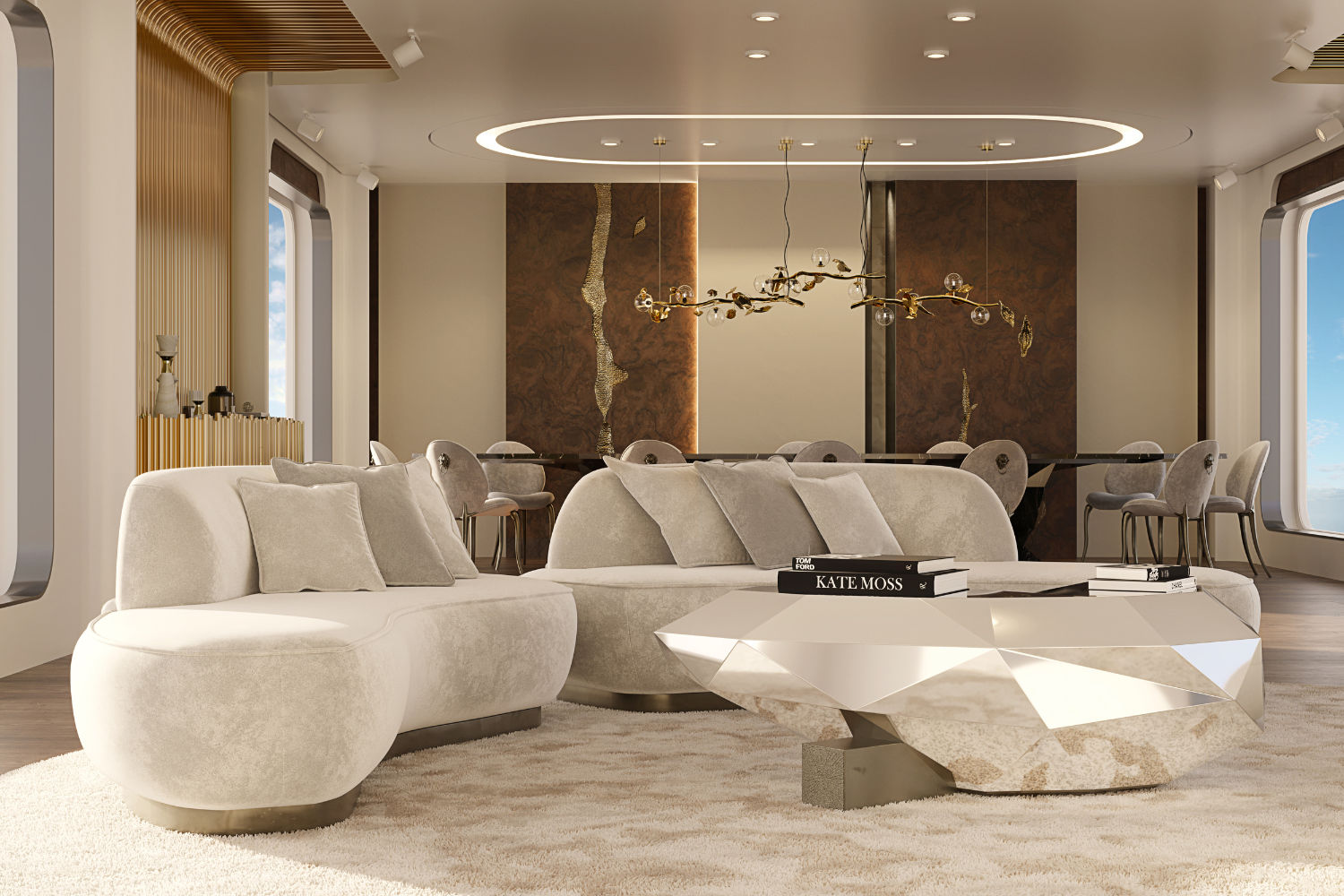
The Best Sofa Tables for Every Living Room
A sofa table — the long, narrow table placed behind a sofa — is one of the most underutilized opportunities in living room design. Most people either don't have one or treat it as a surface for lamps and nothing else. Done well, a sofa table defines the back of a seating arrangement, adds storage and display space, and brings a room's point of view into sharp focus
This guide covers everything worth knowing about choosing and styling a sofa table — from sizing and material to the styling approaches that make the surface earn its place.
What Makes a Sofa Table Different From a Console Table
The terms are often used interchangeably, but they describe slightly different pieces. A console table is typically placed against a wall — in an entryway, a hallway, or behind a sofa pushed against a wall. A sofa table is specifically designed to sit behind a floating sofa, visible from both sides.
That positioning difference drives a few design requirements:
• Height: a sofa table should be the same height as the sofa back, or within an inch or two below it. Too tall and it looms over the sofa; too short and it disappears behind it.
• Depth: sofa tables are typically 12 to 15 inches deep — narrow enough not to protrude awkwardly but wide enough to hold a lamp and styled objects.
• Length: the table should be proportional to the sofa — typically between half and the full length. A table that's longer than the sofa creates an odd visual imbalance.
Sizing Guide: Getting the Proportions Right
|
Sofa Length |
Ideal Table Length |
Ideal Height |
Notes |
|
72" (6 ft) |
36–54" |
Sofa back height ±2" |
Shorter tables work; center behind sofa |
|
84" (7 ft) |
48–72" |
Sofa back height ±2" |
Full-length option works well at this size |
|
96" (8 ft) |
60–84" |
Sofa back height ±2" |
Two-thirds length prevents overcrowding |
|
Sectional |
Match one side's length |
Sectional back height ±2" |
Place at the open end or long side only |
Material Options and What Each Brings
The material of the sofa table sets its tone in the room more than almost any other design decision. Here's how the most common options behave:
• Solid wood: warm, durable, and the most forgiving across style contexts. Oak and walnut are the most versatile; pine works in casual and farmhouse settings. Solid wood ages well.
• Metal frame with wood or stone top: the combination of a metal base with a contrasting top is the most popular contemporary approach. It's lighter visually than solid wood and works across modern, industrial, and transitional rooms.
• Marble or stone top: striking and high-impact, but heavy and requiring maintenance. Works best when marble appears elsewhere in the room — as a side table, a tray, or decorative objects.
• Glass top with metal frame: visually lightweight — nearly disappears in tight spaces. The top shows fingerprints easily and limits what can be displayed on it.
• Painted wood: high versatility — the painted finish can match virtually any wall color or room palette. Chalky or matte finishes hold up better than glossy ones.
|
The Floating Sofa Opportunity If your sofa floats in the middle of the room — not pushed against a wall — a sofa table transforms the back of the seating arrangement from a visual void into a design moment. It defines the boundary of the seating area, provides a surface for lamps that bring light into the room's center, and creates a layered visual anchor that a bare sofa back simply can't provide. For rooms where the sofa is the first thing you see when you walk in, a sofa table is one of the highest-impact additions you can make. |
How to Style a Sofa Table
The sofa table surface is a display opportunity with specific constraints: it's long and narrow, it's seen from behind the sofa as well as from the front, and it needs to be tall enough to read above the sofa back.
Styling approaches that work consistently:
• Lamp as anchor: one or two table lamps are almost always the right primary object on a sofa table. They bring light to the center of the room (important for floating sofas) and provide the height needed to read above the sofa back.
• The third-third-third rule: divide the table visually into thirds. Style two of the thirds and leave one clear. Groupings of objects in two zones with breathing room between them read as curated.
• Vary the heights: lamp (tallest) + medium-height object (vase, small plant, framed print) + low object (tray, books, ceramic bowl). The variation in height creates visual movement along the table.
• Ground with a tray: a tray in the center or at one end organizes smaller objects and creates a visual anchor that prevents the surface from reading as scattered.
Browse S.W. Home's home decor collection for console and sofa table styling objects — from decorative trays and decorative objects to textiles that tie the table to the rest of the room.
|
Find What Belongs on Your Sofa Table S.W. Home carries home decor, accent objects, and textiles hand-picked to work in real living rooms. Browse the full collection and style your space with intention. |
