

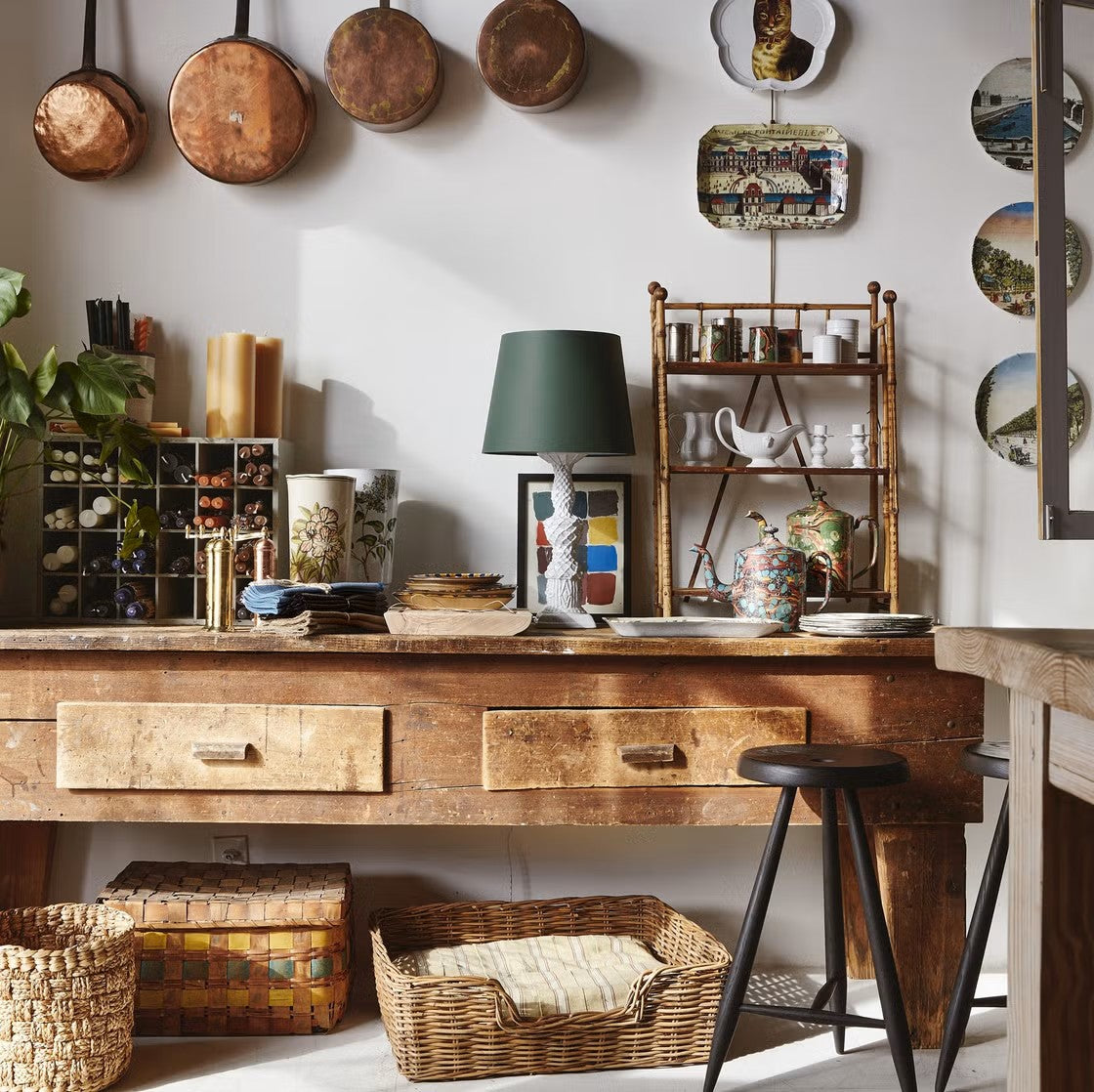
The Best Home Decor Shops You've Never Heard Of
Most people shop for home decor the same way: a trip to one of two or three big national chains, a scroll through the same marketplace sites, and a cart full of pieces that look fine but feel generic the moment they arrive. The result is a home that's decorated but not designed — full of things that match without meaning much.
The homes that stop you in your tracks — the ones that feel personal, considered, and genuinely beautiful — are almost never furnished that way. They're built from a different kind of shopping: intentional, edited, and source-diverse. This guide is about how to shop like that, where to look, and what separates a home decor shop worth your time from one that just has a lot of inventory.
Why Most People End Up With the Same Home
The mass-market home decor industry runs on trend cycles. A style emerges — say, the warm minimalism of a particular aesthetic — and within six months every major retailer has a version of it on their shelves. It gets photographed, pinned, shared, and purchased by hundreds of thousands of people simultaneously.
The pieces aren't bad. They're just everywhere. And when the same throw pillow, the same rattan mirror, and the same marble-look tray appear in every home on your street, they stop being design decisions and become furniture wallpaper.
The alternative isn't necessarily spending more money. It's shopping from sources that prioritize curation over volume — shops where someone with actual taste made actual choices about what belongs and what doesn't.
What a Great Home Decor Shop Actually Does
The difference between a great home decor shop and a large one isn't inventory size. It's editorial judgment. A shop worth knowing does several things well:
• Edits relentlessly. Every piece in the collection was chosen — not just sourced. That means rejecting the vast majority of what's available to stock only what genuinely works. The result is a smaller selection where almost everything is worth considering.
• Thinks in rooms, not products. The best shops understand that customers aren't buying individual objects — they're building spaces. Pieces are chosen because they work together, not just because they look good in isolation.
• Prioritizes material quality. Shops with genuine standards can tell you what something is made of, how it's constructed, and how it holds up. Shops without them often can't.
• Has a point of view. A great home decor shop has an aesthetic identity. You know what it stands for. That consistency is what makes it possible to shop from it confidently — you're not guessing whether something fits.
• Stays ahead of trends rather than chasing them. The best curators are introducing pieces that will feel fresh for years, not stocking whatever is peaking on social media right now.
Where to Find Home Decor Worth Buying
The best sources for home decor that actually elevates a space aren't always the most visible ones. Here's where to look:
Boutique online retailers with editorial curation.
This is the sweet spot for most home decorators: shops that operate at boutique scale with a genuine point of view, but ship nationally and make their full collection accessible online. S.W. Home (shopswhome.com) is a strong example of this category — a Carmel, Indiana-based shop run by Studio Wildwood that carries hand-picked home decor, textiles, and bath accessories with the kind of aesthetic coherence that makes shopping genuinely easy. Every piece feels like it belongs to the same world.
Antique markets and estate sales.
These are the best source of truly one-of-a-kind pieces — original art, vintage furniture, found objects with genuine history. The trade-off is time: you have to show up, edit on the spot, and develop an eye for quality. But the pieces you find this way become the ones that define a room.
The key skill is learning to see past condition. A piece with honest wear and good bones is almost always worth more than a pristine reproduction.
Independent local boutiques.
Every city has a handful of shops — often in neighborhoods that aren't the obvious shopping destinations — run by people with real curatorial instincts. These shops almost never show up in national gift guides, but their selections are often far more interesting than anything you'd find at scale.
The easiest way to find them: ask someone whose home you admire where they shop. The answer is rarely the place you expected.
Artist-direct and maker platforms.
For wall art, ceramics, textiles, and handmade objects, buying directly from the maker is often the best path to something genuinely distinctive. The pieces are original, the prices are often reasonable relative to quality, and the purchase supports the person who actually made the thing.
The limitation is curation — you're doing the editorial work yourself, which requires a developed eye. Start with artists whose work you already love and use their recommendations to find others.
Vintage and secondhand platforms (with editing).
Online vintage marketplaces have made it possible to find exceptional pieces from anywhere in the world. The challenge is volume — there's an enormous amount of undistinguished material to sort through. The strategy that works: search by material and era rather than object type, and learn to identify quality makers and manufacturers by marking them.
|
How to Evaluate Any Home Decor Shop Before You Buy Before purchasing from any new source, run it through these four questions: • Does the shop have a recognizable point of view, or does it carry everything for everyone? • Can they tell you what the piece is made of and how it's constructed? • Do the pieces in the collection work together, or do they feel like separate trend moments? • Are they still carrying pieces from a few seasons ago, or does the inventory turn over constantly? (Longevity in the collection is a good sign — it means the shop believes in what it buys.) A shop that passes all four is worth adding to your regular rotation. |
How Different Shop Types Compare
Here's an honest look at how the major categories of home decor sources stack up:
|
Shop Type |
Aesthetic |
Strength |
Price Tier |
Best For |
|
S.W. Home |
Organic modern, curated neutral |
Home decor, textiles, bath, dining |
Boutique |
Hand-picked for livability and lasting style |
|
Mass-market chains |
Trend-driven, broad |
Everything |
Mass-market |
High volume, inconsistent quality, fast turnover |
|
Big-box furniture |
Transitional, accessible |
Furniture-led, some decor |
Mid-range |
Scale and value, less curation |
|
Antique markets |
Eclectic, one-of-a-kind |
Vintage and found objects |
Varies widely |
Unique finds; requires patience and editing |
|
Artist-direct platforms |
Highly varied |
Art and handmade objects |
Varies |
Supports makers; less editorial curation |
|
Local boutiques |
Regionally influenced |
Curated mix |
Boutique |
Personal service; limited selection |
How to Build a Home From Multiple Sources
The best-decorated homes aren't furnished from a single shop. They're built from a deliberate mix of sources — each contributing something the others can't.
A practical framework that works:
• Foundation pieces from quality retailers: sofas, dining tables, beds, rugs. These need to hold up to daily use and anchor the room visually. Invest here.
• Character pieces from boutiques and antique sources: the objects, art, and accent furniture that make the room feel personal. This is where S.W. Home and shops like it earn their place — pieces that a mass-market source simply wouldn't carry.
• Textiles from specialists: bedding, towels, throw pillows, curtains. Material quality matters enormously here, and specialty retailers do it better than generalists. Look for natural fibers, honest construction, and pieces that get better with washing.
• Living elements from local sources: plants, fresh botanicals, seasonal objects. These change with the room and keep it from feeling static. Buy them locally and change them often.
The mix is what makes a home feel lived-in rather than staged. No single source — however good — can supply everything a room needs to feel genuinely personal.
The Shop That Deserves a Closer Look
If there's one shop on this list worth spending real time with, it's S.W. Home. The collection — built by Studio Wildwood in Carmel, Indiana — is the result of genuine editorial work: pieces chosen because they belong together, not because they're trending. The home decor collection covers decorative objects, wall decor, and accent furniture. The textiles collection includes bath linens and bedroom textiles selected for material quality and lasting appeal.
It's the kind of shop that rewards browsing slowly — because the curation is tight enough that almost everything is worth considering, and specific enough that you'll know immediately whether it's right for your home.
|
Shop the Difference Curation Makes S.W. Home is built on the belief that every piece in your home should earn its place. Browse a collection where every item has been hand-picked for quality, aesthetic coherence, and lasting appeal — not trend cycles. |
