

The Architecture of Trees: Coffee Table Books as Design Inspiration
Introduction
Coffee table books have always been more than reading material—they’re a design statement. They tell a story about who you are, what inspires you, and how you live. Among the most striking titles to grace modern homes is The Architecture of Trees—a masterpiece that blends science, art, and design in a way that feels both intellectual and organic.
For design lovers, books like The Architecture of Trees do more than fill shelves—they elevate spaces. They add texture, sophistication, and a quiet depth that anchors a room.
Why Coffee Table Books Matter in Interior Design
A well-chosen book collection transforms a surface into a styled vignette. Coffee table books invite curiosity, spark conversation, and balance decorative objects with substance.
Here’s why they’re essential:
-
They add layers: Books introduce height and structure, grounding lighter décor pieces like vases or candles.
-
They tell your story: The subjects you choose—architecture, nature, design—reflect your personal aesthetic.
-
They add visual rhythm: Covers and spines introduce color, typography, and texture into neutral spaces.
In essence, books function as quiet design anchors—elements that make your home feel curated rather than decorated.

Spotlight: The Architecture of Trees
Originally created by Cesare Leonardi and Franca Stagi, The Architecture of Trees is a visual encyclopedia of tree forms—each one drawn with meticulous precision. The book celebrates the artistry of nature and has become a favorite among architects and designers for its timeless beauty.
Why It Belongs in Your Collection
-
Artistic Appeal: Each page feels like a work of art, detailed yet calming.
-
Design Inspiration: The forms and patterns of trees echo architectural symmetry, offering unexpected design ideas.
-
Versatility: Its large format and soft color palette make it a stunning centerpiece for coffee tables, consoles, and shelves.
The Architecture of Trees bridges the gap between art and nature, reminding us that good design is rooted in observation and balance.
How to Style Coffee Table Books Like a Designer
1. Stack Strategically
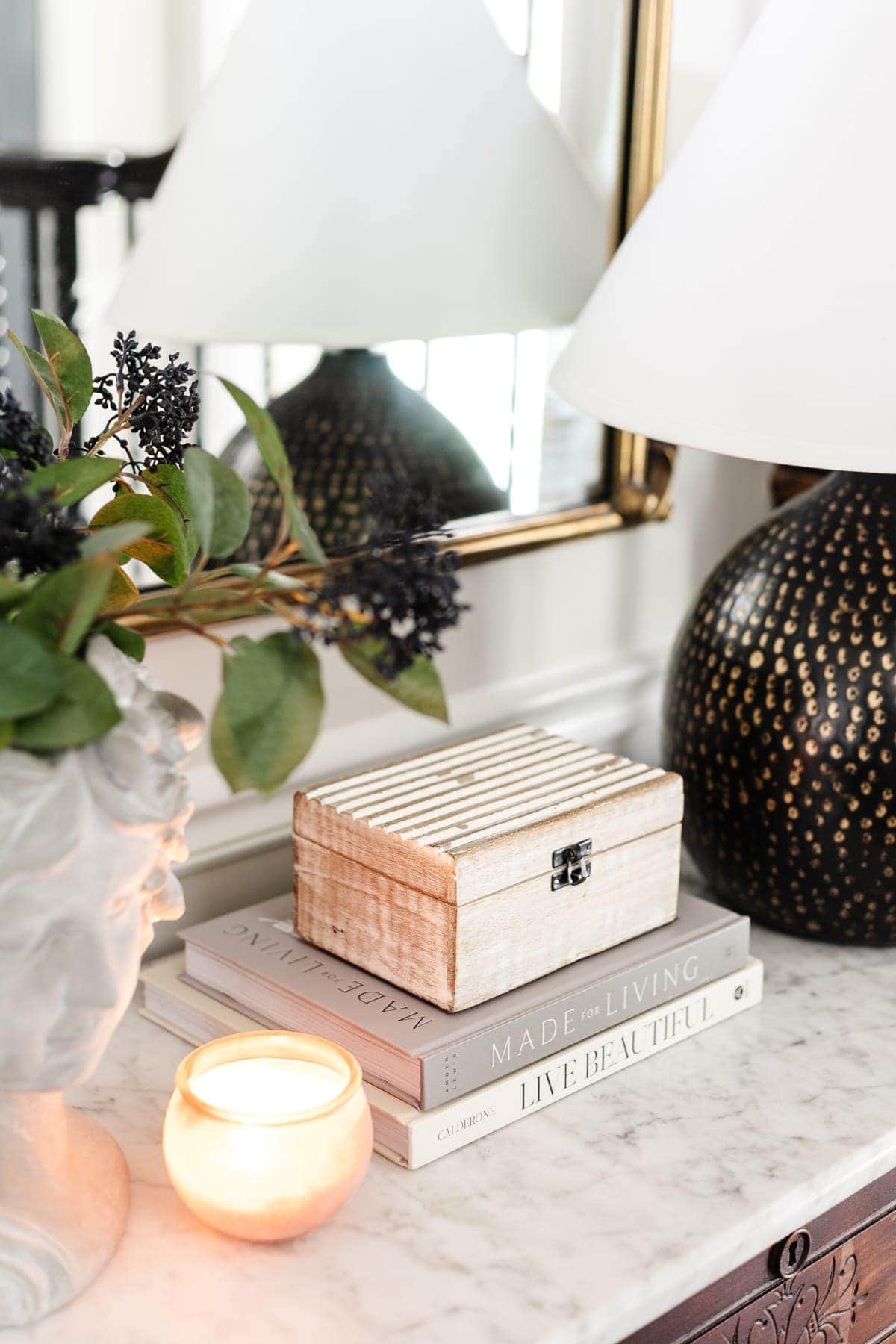
Group books in stacks of two or three to create layers of height. Place larger books like The Architecture of Trees at the bottom and smaller titles—such as From the Land or Nature’s Palette—on top.
2. Add Sculptural Contrast
Top your stack with a decorative object: a ceramic bowl, a brass box, or a small vase. This creates a focal point while breaking up straight lines.
3. Mix Materials and Tones
Combine books with stone or travertine trays, woven baskets, and glass accents for depth. These material contrasts prevent a flat look and tie the vignette into the broader room design.
4. Use Books Across the Home
-
Living Room: Display on a coffee table or side console.
-
Bedroom: Stack a few titles on the nightstand with a candle.
-
Entryway: Pair with greenery or a sculptural vase for an inviting first impression.
-
Dining Room: Showcase larger design books on a sideboard to add sophistication.
Books are not confined to one space—they’re versatile design tools.
Other Must-Have Titles to Pair With The Architecture of Trees
-
From the Land — Architectural reflections that complement the natural forms in The Architecture of Trees.
-
Nature’s Palette — A celebration of color inspired by flora and fauna.
-
Kinfolk Travel — A minimalist’s approach to global beauty and culture.
Together, they create a cohesive library that feels thoughtful and timeless.
FAQs About Coffee Table Books
Q: How many coffee table books should I display?
Three to five is ideal for most tables. You want variety without overcrowding the surface.
Q: Should I remove book jackets for styling?
Yes, if the hardcover underneath has a clean design or neutral tone—it adds a more refined, cohesive look.
Q: Are coffee table books just for decoration?
Not at all. The best ones inspire creativity and spark ideas. They’re meant to be enjoyed as much as they are displayed.
Q: How do I keep books from looking cluttered?
Stick to a consistent color palette and leave some breathing room. Think gallery, not library.
Conclusion
The Architecture of Trees isn’t just a book—it’s a piece of art that embodies the connection between nature and design. When incorporated into your home, it brings visual harmony and intellectual depth, transforming surfaces into curated expressions of style.
Whether displayed alone or alongside other design classics, it serves as a reminder that inspiration often begins with observation—and that even in modern interiors, nature remains the ultimate designer.
