

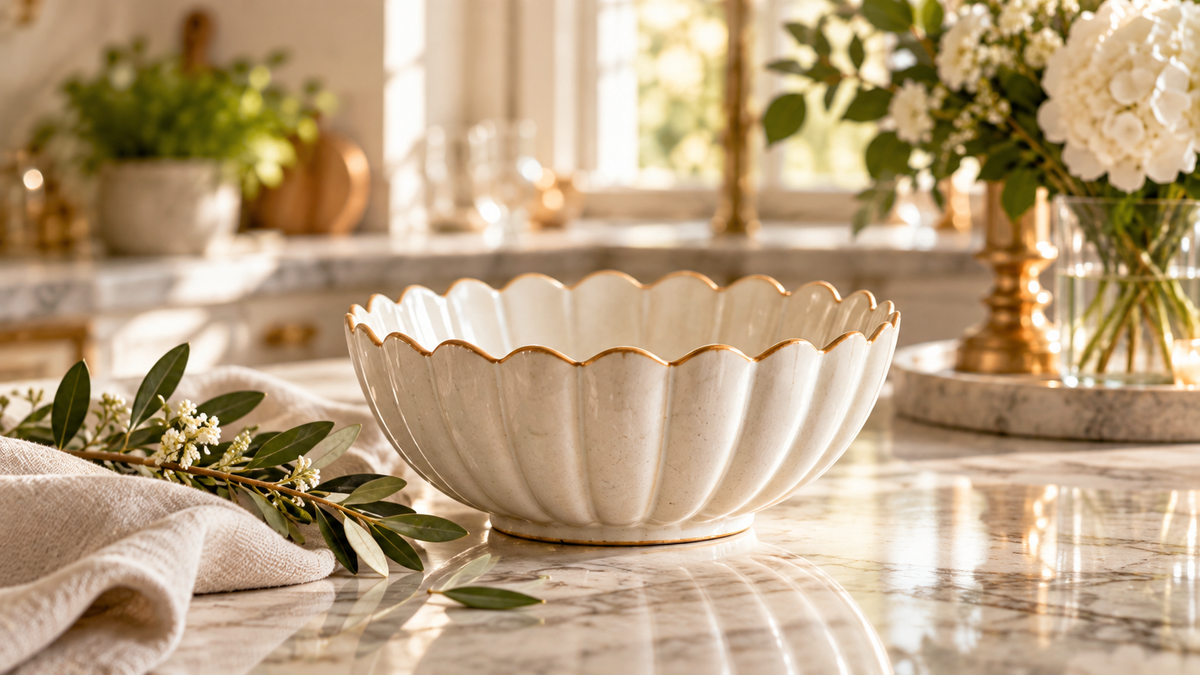
Scalloped Ceramic Bowl: Why This Shape Is Worth the Upgrade

A scalloped ceramic bowl is a specific object — not just a bowl with a decorative edge, but a vessel where the rim's rhythmic curves change the entire visual character of what would otherwise be a utilitarian form. If you've come across one and wondered what makes it different, or why it commands more attention than a plain bowl, this explains exactly that.
What "Scalloped" Actually Means
Scalloped refers to a repeating curved edge pattern — a series of convex arcs along the rim of the bowl, resembling the edge of a scallop shell. The curves are consistent in size and spacing, creating a rhythmic, organic border that adds visual interest without being geometric or rigid.
The scalloped edge transforms a ceramic bowl from a functional object into something with deliberate design. It's the detail that makes you look twice at an otherwise simple form.
Why Ceramic Is the Right Material for a Scalloped Edge
The scalloped edge works best in ceramic because ceramic holds its form precisely when fired. The curves are crisp, the edges smooth, and the weight of ceramic gives the bowl the presence that the detail deserves. In thinner materials — glass, thin porcelain — the scalloped edge can look fragile or insubstantial. A ceramic scalloped bowl has mass and permanence.
• Matte ceramic: Matte ceramic: The most current and versatile finish. The matte surface emphasizes the sculptural quality of the scalloped edge
• Glazed ceramic: Glazed ceramic: Polished and reflective. The glaze catches light at the scalloped curves, adding dimension
• Stoneware: Stoneware: Heavy, earthy, and organic. Best for a rustic or organic-modern aesthetic
How to Use a Scalloped Ceramic Bowl
A scalloped ceramic bowl works in three distinct contexts — and the best ones move between all three:
• Kitchen use: Fruit, citrus, garlic, small produce. The bowl earns its place on the counter as a display object while doing kitchen work
• Serving: Chips, nuts, olives, dips. The scalloped edge makes serving feel considered
• Pure display: Left empty on a coffee table, console, or shelf as a sculptural object — a bowl as decoration
Styling a Scalloped Ceramic Bowl
Because the scalloped edge adds visual texture, keep the surrounding objects simpler. A scalloped bowl pairs well with:
• Smooth-sided vases or vessels that contrast the curved edge
• Stacked books or a single candle — objects that provide height without competing texture
• Natural materials: a linen runner, a wood tray, dried botanicals
On a coffee table: center the bowl on a tray, with a small candle or decorative object beside it. The scalloped edge gives the grouping its visual interest without needing additional decorative pieces.
Sizes and What Each Is Best For
|
Size |
Best Use |
|
Small (5–6 inch) |
Salt cellar, jewelry catch-all, small decorative display |
|
Medium (7–9 inch) |
The most versatile — fruit, serving, coffee table display |
|
Large (10–12 inch) |
Centerpiece bowl, large fruit display, serving at the table |
Quality Markers
• Even scallops: Run your finger along the scallops — each curve should be smooth and consistent, with no rough edges or variation in depth
• Stable base: The bowl should sit flat without rocking — a sign of even firing and careful construction
• Glaze coverage: Complete glaze coverage with no drips pooling in the scallop valleys
|
Find scalloped ceramic bowls and decorative objects at S.W. Home → shopswhome.com |
