

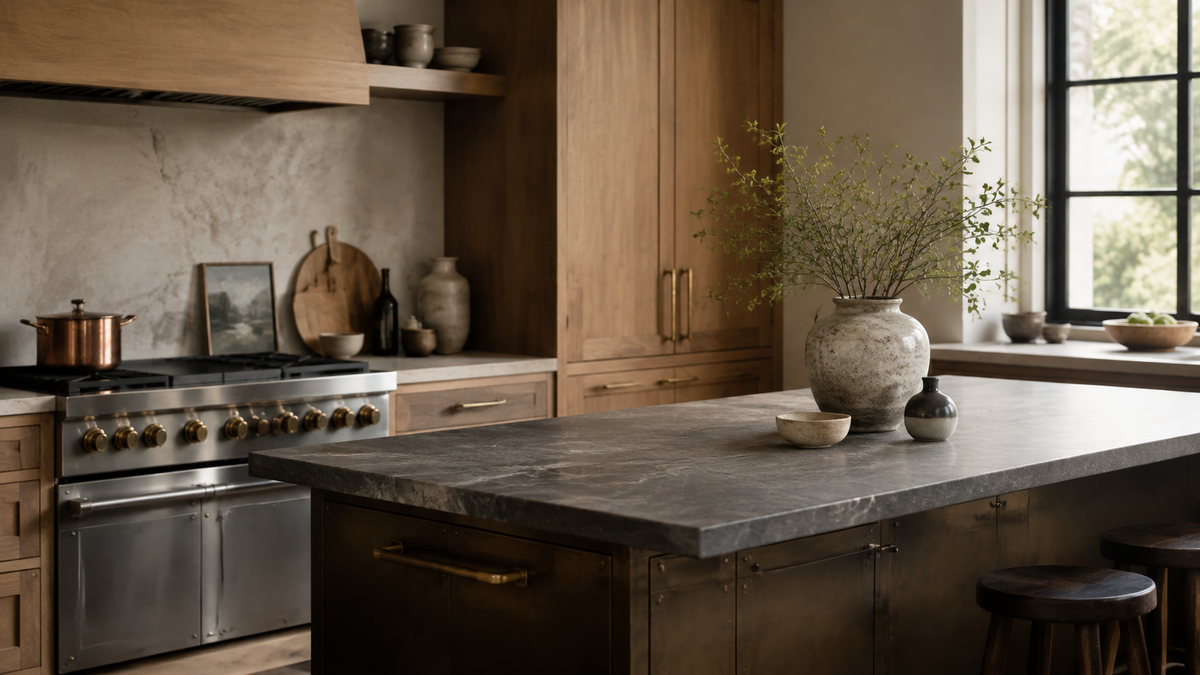
Mixed Wood and Metal Kitchens: How to Balance the Look
A mixed wood and metal kitchen feels layered and lived in. Wood brings warmth and natural variation; metal adds definition and reflectivity. The key is hierarchy: let one material lead, another support, and smaller accents connect the room.
Good design begins with the way a room is actually used. Measure carefully, choose materials that suit the household, and leave enough open space for each element to feel intentional.
Choose a Dominant Material
Identify the largest visual surface, often cabinetry, flooring, or an island. Let it establish the room’s overall temperature.
Before committing, test the arrangement from the main doorway and from the places where people sit or move through the room. Small adjustments to scale, spacing, and repetition often make a larger difference than adding another object.
Coordinate Undertones
Wood can read yellow, red, gray, or neutral. Pair it with metal for either harmony or intentional contrast.
Before committing, test the arrangement from the main doorway and from the places where people sit or move through the room. Small adjustments to scale, spacing, and repetition often make a larger difference than adding another object.
Repeat Supporting Finishes
A finish feels deliberate when it appears two or three times. Relate hardware to a kettle or frame and wood cabinetry to boards or stools.
Before committing, test the arrangement from the main doorway and from the places where people sit or move through the room. Small adjustments to scale, spacing, and repetition often make a larger difference than adding another object.
Use Countertop Accents
Layer one wood board with stone, a ceramic vessel, and a small aged-metal object. Leave breathing room around each grouping.
Before committing, test the arrangement from the main doorway and from the places where people sit or move through the room. Small adjustments to scale, spacing, and repetition often make a larger difference than adding another object.
Know When to Edit
If the kitchen feels busy, remove the smallest unrelated finish first. Clear hierarchy matters more than perfect matching.
Before committing, test the arrangement from the main doorway and from the places where people sit or move through the room. Small adjustments to scale, spacing, and repetition often make a larger difference than adding another object.
Common Mistakes to Avoid
Avoid buying by appearance alone, overcrowding the surface, or forcing every finish to match. Confirm dimensions, care instructions, and daily function first. A restrained palette and clear hierarchy will keep the result calm and lasting.
For complementary furniture and accents, explore the S.W. Home collection and the curated home decor collection.
Frequently Asked Questions
How many metal finishes can I use?
Two is an easy start; a restrained third can work when one is dominant.
Must wood tones match?
No. Coordinate undertones and vary lightness deliberately.
Can brass and stainless coexist?
Yes. Stainless acts as a neutral while brass adds warmth.
How do I make it intentional?
Choose a dominant material and repeat supporting finishes.
What accessories bridge the mix?
Stone, neutral ceramics, baskets, glass, and linen.
Bring the Look Home
Thoughtful rooms balance beauty, usefulness, and personality. Start with the essential piece, build in layers, and edit until every item earns its place.

