

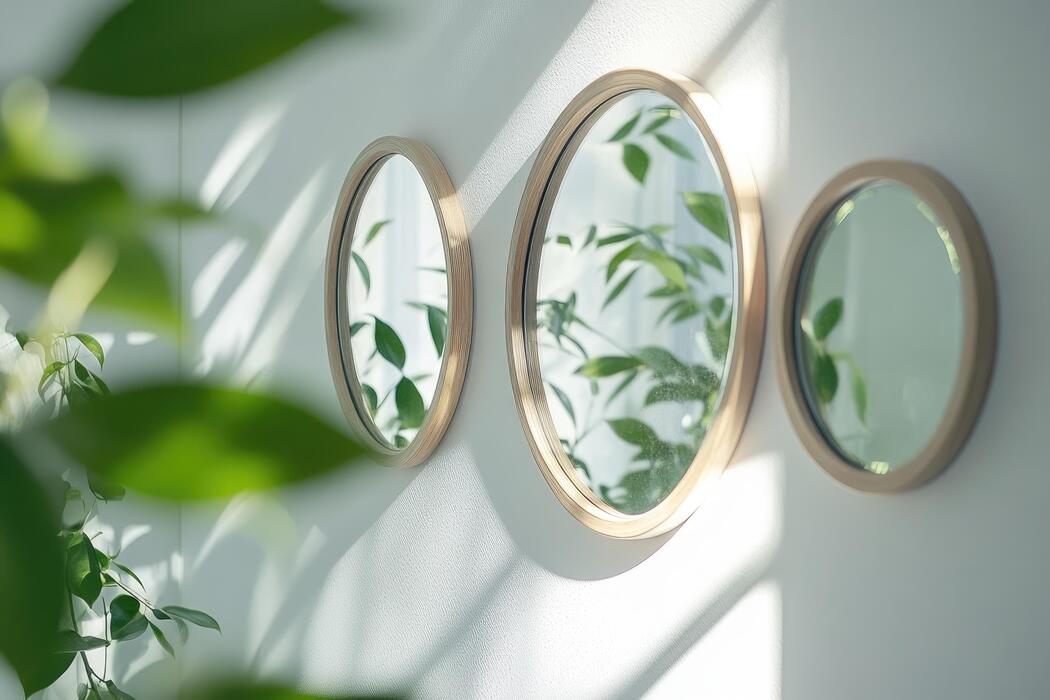
Mirrors for Home: How to Choose, Place, and Style Them in Every Room
A well-placed mirror is one of the most impactful decorating tools available — and one of the most frequently underused. Not because mirrors are hard to find, but because the decisions around size, placement, and style are less obvious than they first appear. A mirror hung at the wrong height or in the wrong position loses most of its effect. Positioned correctly, it bounces light, extends space, and contributes visual interest in ways no other wall accessory can replicate.
This is the complete guide to mirrors for home — how to choose the right style and size, where to place them for maximum effect, when to lean versus hang, and how to integrate a mirror into a room so it feels like it belongs rather than just fills a wall.

What a Mirror Actually Does in a Room
Understanding the functional effects helps you make the right placement decision:
• Multiplies light: a mirror reflects whatever light source is opposite it — a window, a lamp, a pendant. In dark rooms and north-facing spaces where natural light is limited, a mirror placed to catch and redirect available light is more effective than adding another fixture.
• Creates depth: a mirror reflects the room back on itself, creating the optical impression of space beyond the wall. In small rooms, a large mirror makes the space feel twice as deep.
• Adds a focal point: a significant mirror on an otherwise blank wall gives the eye an anchor — somewhere to rest. This is particularly valuable in entryways and hallways, which are transition spaces that often lack any designed focal point.
• Doubles the visual interest of a room: a mirror positioned to reflect a beautiful part of the room — a great lamp, a gallery wall, a window with a view — puts that element in view from multiple angles simultaneously.
Mirror Shapes and What Each Brings
|
Shape |
Visual Character |
Best Room |
Notes |
|
Rectangle |
Structured, formal, versatile |
Entryway, living room, dining room |
Most versatile shape — works in every style |
|
Round |
Organic, soft, contemporary |
Bathroom, bedroom, entryway accent |
Softens angular rooms; one of the most popular current styles |
|
Arch / arched top |
Architectural, elegant, draws height |
Entryway, living room, bedroom wall |
Excellent for low-ceiling rooms — draws eye upward |
|
Sunburst / starburst |
Decorative, bold, 1960s-influenced |
Living room, dining room as art moment |
The mirror is the statement; keep surroundings simple |
|
Irregular / organic edge |
Contemporary, artistic, distinctive |
Living room, as gallery wall anchor |
Strong aesthetic commitment — high impact, less versatile |
|
Full-length |
Practical, proportional, essential |
Bedroom, dressing area, entryway |
Functional first; choose frame style carefully |
Sizing: The Rules That Prevent the Most Common Mistakes
• Above a console or entryway table: the mirror should be 50–80% of the table's width. A mirror as wide as or wider than the table underneath it looks unanchored. The bottom of the mirror should sit 6–12" above the table surface.
• Above a sofa: same rule — 50–75% of the sofa's width. A mirror spanning the full width of the sofa is too dominant. The center of the mirror should sit at 57–60" from the floor (standard eye level).
• As a standalone wall piece: go larger than feels comfortable. The most common mirror mistake is choosing one that's too small for the wall — it floats and looks incidental. A mirror that fills 60–75% of the wall width anchors the space.
• Full-length mirrors: at minimum, the mirror should be half your height to show your full reflection. Standard full-length mirrors are 48"–65" tall. For a bedroom or dressing area, lean toward the larger end.
Hanging vs. Leaning: When Each Works
Hung mirrors are formal and permanent — they communicate that a deliberate decision was made about this wall. Leaned mirrors are relaxed and contemporary — they suggest ongoing curation, a room that's still becoming something. Both are legitimate approaches; the choice signals something about the room's character.
Leaning works best when:
• The mirror is large enough (at least 24" wide) that leaning looks intentional rather than forgotten
• The room's aesthetic is contemporary, eclectic, or deliberately casual
• The floor is clean and the baseboard is attractive — these become part of the visual when a mirror leans
• The wall behind the mirror would look worse with a hole in it
Hanging works best when:
• The mirror has a beautiful frame that deserves to float cleanly against the wall
• The wall position requires precision — directly above a console table, flanking a fireplace, centered on a dining room wall
• The room's aesthetic is traditional, formal, or intentionally structured
|
The Placement Test Before You Hang Before drilling, lean the mirror against the wall in its intended position and live with it for 24–48 hours. Walk past it at different times of day. Notice what it reflects — what's in view when you stand in the room's natural traffic path. A mirror that reflects a blank wall or a ceiling adds minimal value. One that reflects a window, a beautiful lamp, or an interesting part of the room doubles the visual impact of that element. The placement test lets you find the position where the reflection does the most work before any permanent decisions are made. |
Mirror Placement by Room: Quick Reference
|
Room |
Best Position |
Ideal Size |
Key Rule |
|
Entryway |
Above console table, centered |
50–75% of table width |
Reflects light from entry door; eye level at 57–60" |
|
Living room |
Beside or opposite window, or above sofa |
Large — fill 60–75% of wall width |
Position to reflect light or a beautiful room element |
|
Dining room |
On wall adjacent to table |
Substantial — 24"+ wide |
Reflects candlelight beautifully at evening meals |
|
Bedroom |
Full-length on a wall or back of door |
At least 48" tall |
Position where morning light hits face — not back-lit |
|
Bathroom |
Vanity mirror + optional secondary |
Cover full width of vanity |
Secondary mirror adds depth; arch top suits most bathrooms |
|
Hallway |
One end to extend depth |
As large as the hall allows |
Extends visual length of narrow spaces dramatically |
Find mirrors, wall decor, and home accessories at S.W. Home — pieces selected for lasting visual impact in real rooms.
|
Shop Wall Decor & Mirrors at S.W. Home Mirrors, wall accessories, and home decor hand-picked to make every room feel larger, lighter, and more considered. Browse the S.W. Home collection. |
