

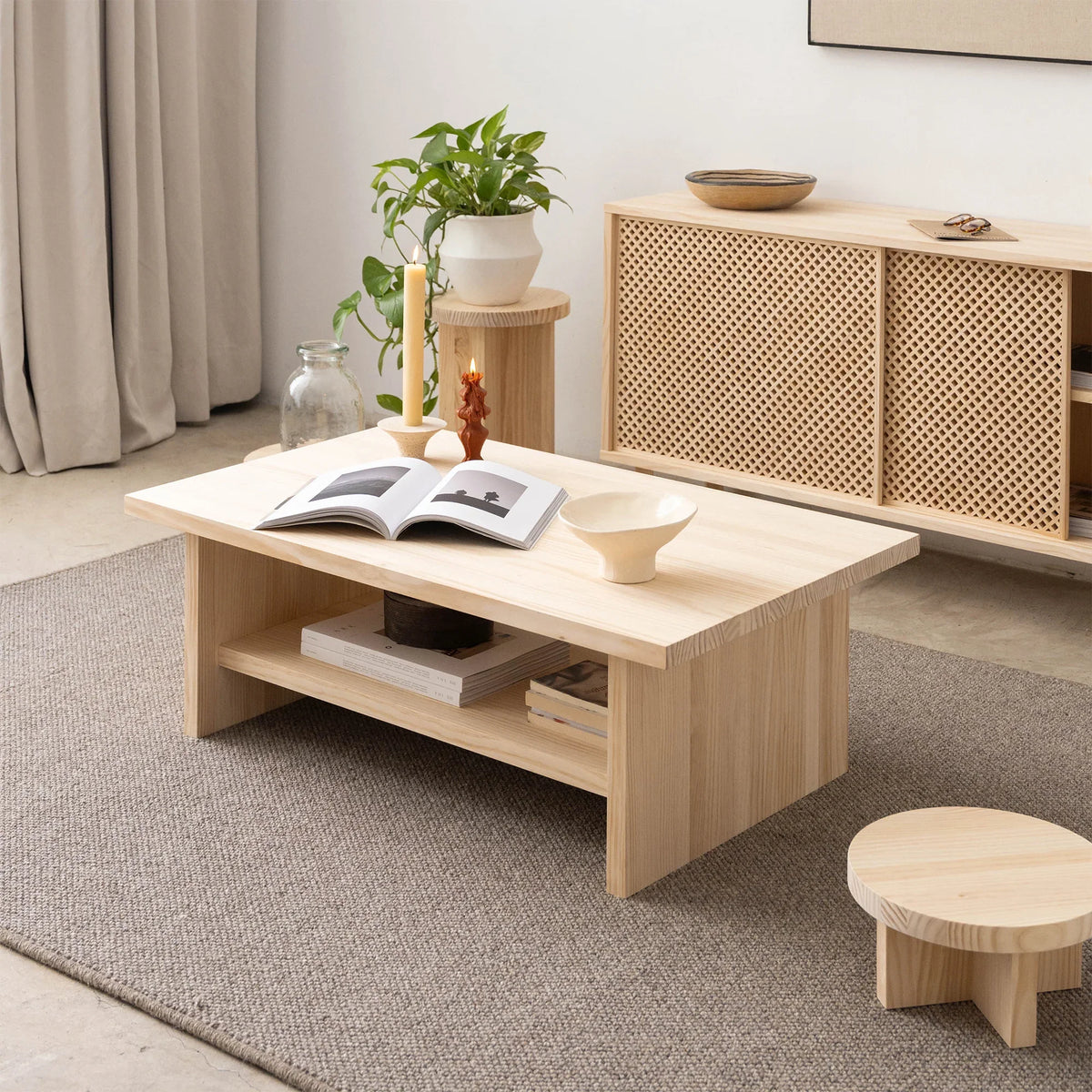
Living Room Tables: How to Choose the Right Combination for Your Space
Most living rooms have too many tables or too few. The tables that do exist are often the wrong size, the wrong height, or purchased at different times with no thought for how they relate to each other. A living room table system — a coffee table, end tables, and possibly a sofa table chosen to work together — creates the visual coherence and practical function that individual purchases rarely achieve.
This guide covers every table type that belongs in a living room, how to size each one correctly, and how to choose pieces that work as a system rather than competing for attention.

The Living Room Table System
A complete living room table arrangement typically involves three types of surface:
• The coffee table: the central, primary surface in front of the sofa. The anchor of the seating arrangement and the room's most styled surface.
• End tables or side tables: one or two tables at the sides of the seating arrangement, providing lamp placement and personal surfaces for seats that don't reach the coffee table.
• A sofa table (optional): a long, narrow table placed behind a sofa that floats in the room — defines the back of the seating arrangement and provides additional surface area.
Each serves a different function. The mistake most people make: buying each piece independently at different times, resulting in mismatched heights, conflicting materials, and proportional inconsistency.
Coffee Table: Sizing Rules That Don't Change
• Length: the coffee table should be approximately two-thirds the length of the sofa. For an 84" sofa, that's a 56" table. Shorter reads as an afterthought; longer can overwhelm the space.
• Height: 16 to 18 inches for standard seating, matching or slightly lower than sofa cushion height. A table that's too tall (above 20") interrupts the sight line and feels like a barrier.
• Clearance: 18 inches between the coffee table edge and the sofa. This is the minimum for comfortable legroom when seated. 18 to 24 inches is the ideal range.
• Shape: round and oval tables are more forgiving in tight spaces (no sharp corners to navigate); rectangular tables provide more usable surface area and work better in long, narrow rooms.
End Tables: The Height Rule Above All
End table height is the single most important dimension — and the one most commonly ignored in favor of style. The surface should sit within two inches of the arm of the adjacent sofa or chair.
Material and style should be chosen to complement the coffee table without matching it exactly. The most effective approach: share a material or finish between the coffee table and end tables (both in wood, or both with a brass element), while varying the shape or size.
The Sofa Table: When and Why
A sofa table — a long, narrow table behind a floating sofa — is the right choice when:
• The sofa floats in the middle of the room (not against a wall), and the back of the sofa is visible from the entry or other rooms
• The room needs additional lamp placement in the center, away from the walls
• The seating arrangement benefits from a visual definition of its back boundary
Height should match or sit just below the sofa back. Depth should be 12 to 15 inches — narrow enough not to protrude awkwardly but wide enough to hold objects.
Mixing Table Styles: The Formula That Works
|
Table |
Best Material |
Mix Strategy |
Avoid |
|
Coffee table |
Solid wood, marble+metal, rattan |
Anchor piece — let it lead the material palette |
Matching the end tables exactly |
|
End tables |
Complement the coffee table material |
Share one material element with coffee table |
Matching each other when on opposite ends |
|
Sofa table |
Wood, metal, or wood+metal |
Match one finish from the other tables |
Oversizing — should be clearly subordinate |
|
Accent side table |
Ceramic, stone, rattan, metal |
Contrast material from primary tables |
Blending in — this should add variety |
|
The One-Third Overlap Rule for Materials When selecting living room tables, aim for each piece to share approximately one-third of its material identity with at least one other table in the room. A brass-and-wood coffee table shares wood with a solid oak end table. A marble-top end table shares stone with a travertine tray on the coffee table. These overlaps create the sense that the pieces belong together without forcing them to match. |
Styling Each Table Type
• Coffee table: groups of odd-numbered objects, 30-40% surface left clear, varied heights, at least one living element (plant, botanicals). The most styled surface in the room.
• End table: lamp as the primary object, one or two supporting objects, one functional item (coaster, book). Surface serves the adjacent seat first, styling second.
• Sofa table: two styled zones with breathing room between, one lamp at minimum, at least one taller object that reads above the sofa back.
Find home decor, decorative objects, and textiles for living room tables at S.W. Home — pieces chosen to work together in real rooms.
|
Style Your Living Room With S.W. Home Decorative objects, textiles, and home accessories hand-picked to complete any living room table arrangement. Browse the S.W. Home collection. |
