

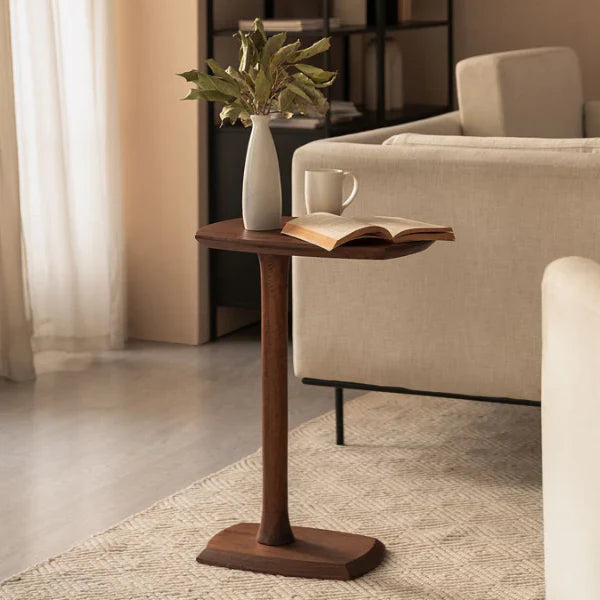
How to Choose the Perfect Side Table for Any Room
The side table is one of the hardest-working pieces of furniture in any home. It holds a lamp, a drink, a book, a phone charger — all the small necessities of daily life — while simultaneously serving as an opportunity to bring material, form, and visual interest to a room. Get it right and it disappears into the room in the best way: perfectly proportioned, quietly useful, exactly where it needs to be. Get it wrong and it either overwhelms its surroundings or fails to serve its purpose entirely.
This guide covers every decision worth making when choosing a side table — height, width, material, style, and how it all changes depending on which room it's going into.
The Most Important Dimension: Height
Height is the single most critical factor in a side table decision, and the one most frequently ignored in favor of style. A side table that's the wrong height for the seat next to it never looks right — regardless of how beautiful the table itself is.
The rule is consistent: the surface of the side table should sit within approximately two inches of the arm of the adjacent seat — either above or below. This gives you comfortable reach from the seated position and creates a visual relationship between the furniture pieces that reads as intentional.
In practice:
• Standard sofa arm height: typically 23 to 25 inches. A side table between 22 and 26 inches suits most sofas.
• Low-profile or mid-century sofa: arm height often 18 to 22 inches. Look for side tables in the 18 to 24 inch range.
• Deep, casual sectional: arm heights vary widely — measure yours specifically before shopping.
• Bedroom nightstand: should sit level with or just above the mattress top. For a standard 25-inch mattress height, a 24 to 28 inch table is the target.
• Chair or reading nook: most arm chairs have arm heights between 24 and 28 inches — verify before buying, as this varies significantly by chair style.
Measure your seat arm height before looking at a single table. It narrows the field immediately and prevents the most common side table mistake.
Width and Footprint: How Much Table Do You Actually Need?
After height, surface area is the next most practical consideration. A side table that can't hold a lamp and a drink simultaneously isn't serving its purpose. One that's so large it crowds the seat next to it or blocks a walkway creates a different problem.
A few guidelines that hold across most situations:
• Minimum useful surface: 14 inches in diameter or width — enough for a lamp base and one other object.
• Comfortable working surface: 18 to 22 inches — room for a lamp, a drink, a book, and a small decorative object without crowding.
• Maximum before it reads as a coffee table: 24 to 28 inches for a circular table; beyond this and the proportions shift.
• Depth in tight spaces: a side table that projects more than 16 inches from a wall or piece of furniture into a walkway becomes an obstacle. In narrow rooms, a C-table (which slides under the seat) or a pedestal with a small top solves the clearance problem entirely.
|
The C-Table: Underrated Solution for Small Spaces A C-table — named for its profile shape — has a base that slides under a sofa or chair, with the surface extending over the arm at seat level. It delivers all the function of a side table with zero floor footprint beside the seat. For small living rooms, apartments, or any situation where floor space is limited, the C-table is one of the most practical furniture solutions available. It works equally well as a laptop stand, a TV dinner surface, or a traditional side table — and tucks away completely when not in use. |
Shape: Round, Square, or Something Else?
Shape affects both the visual character of the table and how it functions in relation to adjacent furniture.
• Round tables are the most versatile and the most forgiving. They have no hard corners to navigate around, they work with any adjacent furniture shape, and they tend to feel less heavy than their square equivalents at the same size. In most living room and bedroom contexts, a round side table is the safe and sensible choice.
• Square and rectangular tables work well when they're paired with angular furniture — a square-armed sofa, a boxy sectional, a linear bed frame. The parallel lines reinforce each other. In rooms with a lot of curves or organic forms, a square table can feel rigid.
• Organic and irregular shapes — tables with asymmetrical or sculptural profiles — add visual interest and work well as statement pieces in otherwise quiet rooms. They require more clearance and a bit more confidence in placement, but the payoff is a table that reads as genuinely designed rather than merely functional.
• Tiered tables offer a second surface at a lower height — useful for storing books, housing a plant, or creating a layered display. The lower tier adds visual weight, which works in a room that needs anchoring and can overwhelm one that's already visually busy.
Material: What Holds Up and What Looks Right
Material choice drives both how the table performs over time and how it reads in the room. Here's an honest assessment of the most common options:
|
Material |
Durability |
Best Style Fit |
Notes |
|
Solid Wood |
Very high |
Traditional, Scandinavian, Organic Modern |
Warm, ages well, pairs with almost anything |
|
Marble / Stone |
High (top) / Medium (base) |
Contemporary, Glam, Transitional |
Striking but heavy; seal regularly |
|
Metal (powder-coated) |
Very high |
Industrial, Modern, Eclectic |
Lightweight, easy to move, mix well |
|
Rattan / Woven |
Medium |
Coastal, Bohemian, Organic |
Adds texture; keep out of direct sun |
|
Glass |
Medium |
Contemporary, Minimalist |
Visually light; shows fingerprints |
|
Ceramic / Terracotta |
Medium |
Organic Modern, Bohemian |
Distinctive but fragile; best as accent |
|
Acrylic / Lucite |
Medium |
Glam, Contemporary, Small Spaces |
Visually disappears — great for tight rooms |
The most versatile combination for almost any room: a solid wood or metal frame with a stone, wood, or ceramic top. The contrasting materials add visual interest, and the combination tends to work across a wide range of existing furniture styles without demanding a perfect match.
Matching vs. Mixing: Do Side Tables Need to Match?
The short answer is no — and in many rooms, matching side tables is the less interesting choice.
In a bedroom, matching nightstands on either side of the bed creates symmetry and calm, which suits the room's function. That symmetry reads as deliberate and refined.
In a living room, two identical side tables flanking a sofa can read as overly formal or catalog-ish. Intentional mismatching — two different tables that share a material, a finish, or a silhouette — reads as collected and personal. The unifying thread might be both tables having a metal base, or both being roughly the same height, or both being in the warm wood family. The variation within that unity is what gives the room character.
The rule: match when symmetry serves the room's function (bedrooms, formal sitting rooms). Mix when the room benefits from variety and personality (living rooms, reading corners, eclectic spaces).
Side Tables by Room: Quick Reference
Height, width, shape, and style priorities shift depending on where the table is going. Here's the full breakdown:
|
Room |
Ideal Height |
Diameter / Width |
Style Approach |
Key Consideration |
|
Living Room |
Sofa or chair arm height ±2" |
16–22" |
Round or organic |
Lamp, drink, book — needs surface area |
|
Bedroom |
Mattress top ±2" |
24–30" |
Any — match or complement bed |
Lamp is essential; drawer a bonus |
|
Reading Nook |
Chair arm height ±2" |
18–24" |
Small footprint — C-table or pedestal |
Just enough room for a drink and a book |
|
Home Office |
Desk height or slightly lower |
Varies |
Functional over decorative |
Extra surface for reference materials |
|
Entryway |
Console height or standalone |
30–36" |
Narrow depth — 10–14" max |
Visual anchor; pairs well with mirror above |
|
Outdoor / Patio |
Chair arm height |
16–22" |
Weather-resistant material essential |
Teak, powder-coated metal, or resin only |
How to Style a Side Table Once You've Chosen It
A side table is both a functional surface and a styling opportunity. The objects on it should serve both purposes — functional enough to justify their presence, considered enough to contribute to the room's overall aesthetic. The coffee table styling principles of odd numbers, varied heights, and breathing room apply here too, just at a smaller scale.
A reliable side table arrangement:
• A lamp. Almost always the primary object. Choose a scale that works with the table size — a lamp that's too small on a generous table looks lost; one that's too large dominates.
• One living or organic element. A small plant, a single stem in a simple vessel, a small bowl with stones or dried botanicals. Something that isn't perfectly static.
• One functional object. A coaster, a small tray, a book being actively read. Something that signals the table is actually used.
• Negative space. Leave at least a third of the surface clear. The open space is what makes the objects on it look chosen rather than accumulated.
For more on building a room around well-chosen accent furniture, browse the full S.W. Home home decor collection — including decorative objects, textiles, and accent pieces selected to work in real rooms.
|
Find the Side Table That Belongs in Your Room S.W. Home carries home decor and accent furniture selected for quality, proportion, and lasting style — pieces that work hard in real rooms and look beautiful doing it. Browse the full collection. |
