

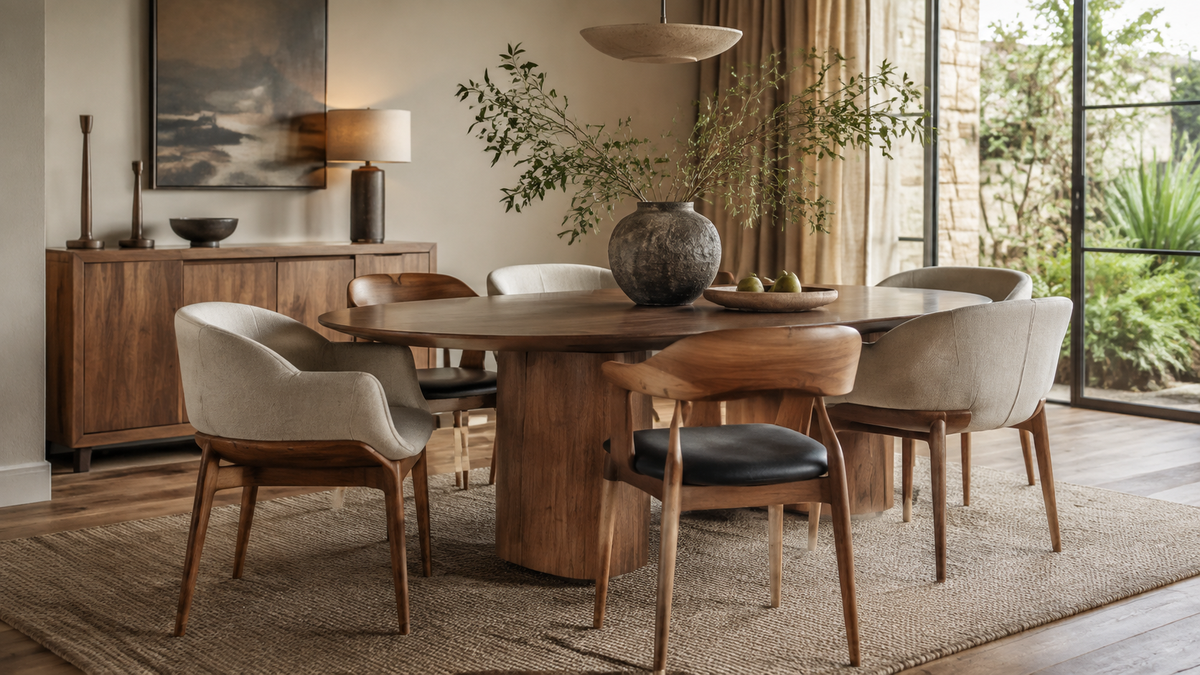
How to Choose Dining Chairs: Comfort, Scale, and Materials
Dining chairs influence how a room looks, but they also determine how long people want to stay at the table. Seat height, width, back support, table clearance, upholstery, and spacing should lead the decision.
Good design begins with the way a room is actually used. Measure carefully, choose materials that suit the household, and leave enough open space for each element to feel intentional.
Measure the Table First
Measure from the floor to the underside of the tabletop or apron. Compare that with seat and arm height for comfortable legroom.
Before committing, test the arrangement from the main doorway and from the places where people sit or move through the room. Small adjustments to scale, spacing, and repetition often make a larger difference than adding another object.
Allow Space Between Chairs
Include elbow room and gaps rather than dividing the table length by chair width alone. Fewer comfortable chairs are better.
Before committing, test the arrangement from the main doorway and from the places where people sit or move through the room. Small adjustments to scale, spacing, and repetition often make a larger difference than adding another object.
Evaluate Real Comfort
Seat depth should support the thighs without pressing behind the knees. Check back support, arm position, and firmness.
Before committing, test the arrangement from the main doorway and from the places where people sit or move through the room. Small adjustments to scale, spacing, and repetition often make a larger difference than adding another object.
Choose Materials for Your Routine
Wood and woven seats add texture; upholstery softens the room; performance fabric supports busy households. Follow care guidance.
Before committing, test the arrangement from the main doorway and from the places where people sit or move through the room. Small adjustments to scale, spacing, and repetition often make a larger difference than adding another object.
Create a Cohesive Dining Room
Chairs may contrast with the table, but repeat a wood undertone, curve, color, or metal detail. Preserve circulation behind occupied seats.
Before committing, test the arrangement from the main doorway and from the places where people sit or move through the room. Small adjustments to scale, spacing, and repetition often make a larger difference than adding another object.
Common Mistakes to Avoid
Avoid buying by appearance alone, overcrowding the surface, or forcing every finish to match. Confirm dimensions, care instructions, and daily function first. A restrained palette and clear hierarchy will keep the result calm and lasting.
For complementary furniture and accents, explore the S.W. Home collection and the curated home decor collection.
Frequently Asked Questions
How much space belongs under the table?
Compare seat height with the underside of the top or apron to preserve legroom.
Must chairs match the table?
No. Contrast adds interest when proportions or materials connect.
Are armchairs good at the ends?
Yes if their arms clear the table and adequate width remains.
What is easiest to maintain?
Smooth wood is simple; performance upholstery offers practical softness.
How many chairs fit?
Measure between legs and include elbow room and gaps.
Bring the Look Home
Thoughtful rooms balance beauty, usefulness, and personality. Start with the essential piece, build in layers, and edit until every item earns its place.

