

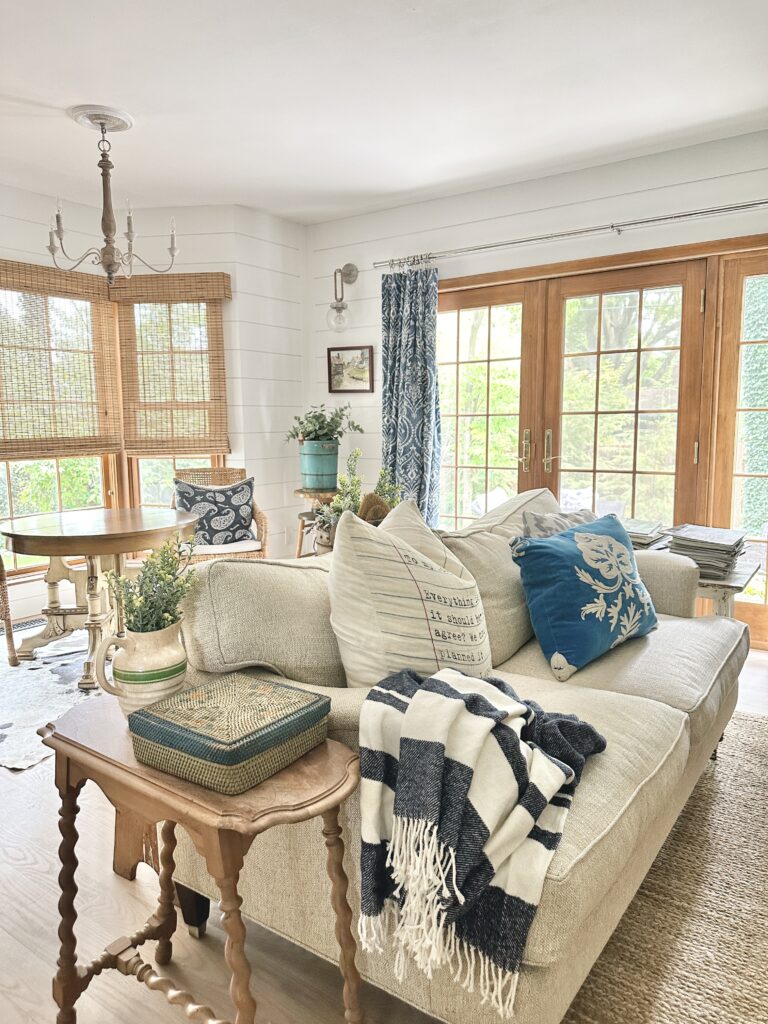
Home Decor Furniture: How to Choose Pieces That Work Together
The furniture you choose defines how a room functions and how it feels. But the question most people wrestle with isn't whether a piece is beautiful — it's whether it will work with everything else they already own. Getting home decor furniture to work together isn't a matter of matching everything perfectly. It's a matter of understanding the principles that create visual harmony across different pieces, styles, and eras.
This guide covers exactly that — how to select, scale, and combine furniture so your home feels intentional, not assembled at random.
Start With a Material Palette, Not a Style Label
Most people start furniture shopping by picking a style — mid-century, farmhouse, coastal — and then hunt for matching pieces within it. The problem: strictly matched styles look like a showroom, not a home.
Designers work differently. They establish a material palette first — two or three materials that will anchor the room — and then select pieces within that palette, regardless of style era or label.
A material palette that works:
• Warm wood tone (oak, walnut, teak) as the primary material across tables and case goods
• One metal finish (brushed brass, matte black, aged bronze) carried consistently through hardware and accent legs
• One soft material (linen, boucle, cotton velvet) repeated across upholstered pieces and textiles
Keep those three consistent and pieces from entirely different style families will still feel like they belong together.
Scale: The Rule That Changes Everything
Wrong-scaled furniture is one of the most common reasons a room feels off — even when every individual piece is attractive. Scale refers to how a piece's size relates to the room and to the other furniture around it.
• Room-to-furniture ratio: leave at least 18 to 24 inches of clearance between major furniture pieces for comfortable circulation. A room that's difficult to move through will always feel cramped, regardless of how it looks.
• Sofa-to-coffee table: the coffee table should be roughly two-thirds the length of the sofa — no shorter, or it reads as an afterthought.
• Chair-to-side table: the side table surface should sit within two inches of the chair arm height — either above or below. Wrong height here is immediately noticeable.
• Console-to-wall: a console table should never be more than two-thirds the width of the wall it's placed against. Oversized consoles make walls feel small.
The Mixing Formula That Actually Works
The most personal and interesting rooms are never furnished from a single source. But mixing without a framework produces chaos. Here's the formula that works:
|
Layer |
What It Does |
Where to Invest |
Example |
|
Anchor pieces |
Define the room's scale and function |
Highest — these stay for years |
Sofa, dining table, bed frame |
|
Supporting furniture |
Fill the room, add utility |
Medium — quality matters |
Side tables, console, accent chairs |
|
Decorative objects |
Add personality and visual interest |
Selective — buy what moves you |
Vases, trays, sculptural objects |
|
Textiles |
Add warmth, texture, layering |
Medium — material quality shows |
Rugs, throws, cushions, curtains |
|
Lighting |
Changes how everything else looks |
High — poor lighting kills good furniture |
Floor lamps, table lamps, pendants |
|
The Two-Third Rule for Mixing Furniture Styles If you're mixing furniture from different style families — say, a traditional sofa with modern side tables — use the two-thirds rule: two-thirds of the pieces in a room should share a style direction, with the remaining third providing contrast. More than one-third contrast and the room starts to feel incoherent. Less and it reads as matched, not curated. |
What to Look for in Quality Home Decor Furniture
Before price, before style, these are the quality markers worth checking on any furniture purchase:
• Joinery on wood pieces: dovetail joints on drawers and mortise-and-tenon construction on frames outlast dowel and staple construction by decades.
• Frame material on upholstered pieces: kiln-dried hardwood frames resist warping. Softwood and engineered wood frames loosen over time.
• Cushion fill: high-density foam (1.8 lb or higher) with a down or fiber wrap holds its shape. Low-density foam compresses and loses loft within a year.
• Finish on wood surfaces: genuine oil or wax finishes age beautifully. Lacquer and polyurethane can chip and peel.
• Hardware: solid brass and forged steel hardware outlasts zamak (zinc alloy) hardware, which pits and tarnishes quickly.
How to Build a Room Around a Furniture Hero
Every well-designed room has a hero piece — one item that anchors the room's point of view. In a living room it might be an exceptional sofa or a distinctive console table. In a bedroom it might be the bed frame or a statement dresser.
Choose the hero first, then build the supporting cast around it. The hero determines the material palette, the scale of surrounding pieces, and the overall aesthetic direction. Everything else responds to it — not the other way around.
At S.W. Home, the home decor collection is built around exactly this principle — pieces selected to anchor rooms and support them, from console tables and decorative objects to the textiles that tie it all together.
|
Shop Home Decor Furniture at S.W. Home Every piece in the S.W. Home collection is chosen to work in a real room — scaled correctly, made well, and selected to complement rather than compete. Browse the full home decor furniture collection. |
