

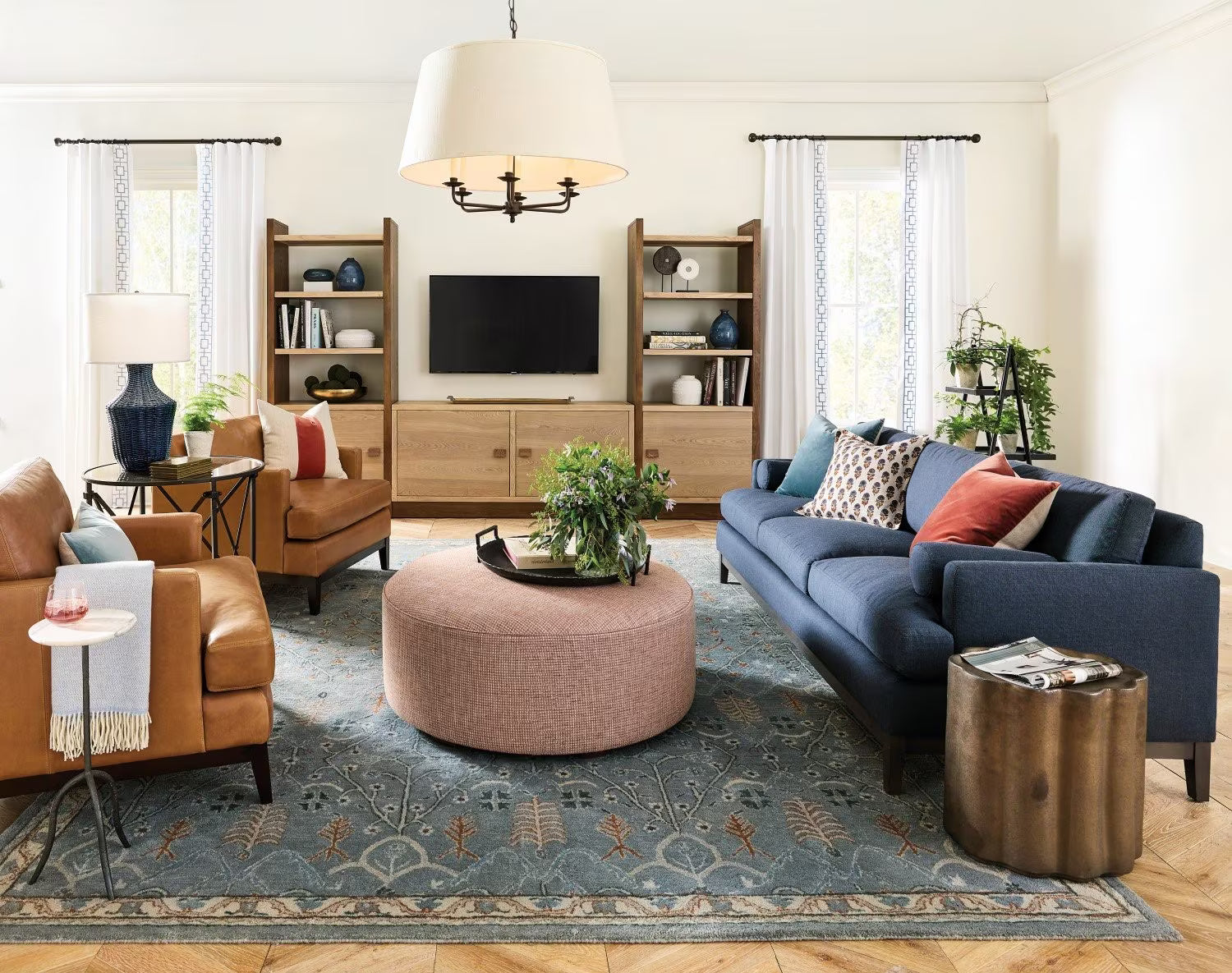
End Tables with Purpose: How to Pair Height, Scale & Finish
Introduction
End tables may be small, but they play a major role in how a living room feels and functions. The right pair brings balance to your seating, anchors your lighting, and adds the layers every well-designed room needs. The wrong pair? They can throw off proportions, interrupt flow, or visually clutter your space.
At Wildwood Home Co., end tables are more than functional surfaces — they’re quiet sculptural moments. Whether crafted from stone, wood, or metal, these pieces are designed to enhance your room with purpose, intention, and natural elegance.
Here’s your guide to pairing height, scale, and finish like a designer.
Why End Tables Matter
End tables aren’t just places to set a drink — they serve as stylistic punctuation marks that complete your living room composition.
What Makes Them Essential
-
Balance: They create symmetry and visual structure.
-
Function: They hold lighting, books, candles, or daily essentials.
-
Texture: They introduce materials like stone, wood, or brass.
-
Comfort: They bring functionality within arm’s reach of your seating.
When chosen thoughtfully, an end table makes a room feel complete — harmonious, grounded, and curated.
1. Height: Find the Right Alignment
Height is the number-one mistake homeowners make when choosing end tables. The rule is simple: your end table should sit roughly even with your sofa arm height.
Ideal Height Range
-
Aim for within 2 inches of the arm:
-
If the sofa arm is 24 inches high → table should be 22–26 inches.
-
If your sofa has no arms, align the table to the seat height.
Why Height Matters
A table that’s too tall overwhelms the silhouette of the sofa, while one that’s too short feels awkward and under-scaled. The right height creates visual flow and everyday ease.
2. Scale: Match Proportions to the Room
Scale is about choosing an end table that complements — not competes with — your furniture.
For Larger Living Rooms
Opt for chunkier silhouettes:
-
Weathered wood blocks
-
Stone pedestal tables
-
Wide round tables
These anchor spacious seating arrangements and feel intentional beside larger sectionals.
For Small or Cozy Spaces
Choose airy or sculptural designs:
-
Slim metal frames
-
Small travertine tops
-
Light wood or open silhouettes
These give the illusion of space while still adding presence.
Pro Tip
End tables don’t always have to match. Mixing shapes and sizes adds dimension and character — especially when tied together through materials or tones.

3. Finish: Choose Materials That Enhance the Room
The finish of your end table affects the entire mood of your space. Use material contrasts to create balance, depth, and warmth.
Stone Finishes
Travertine, marble, or stone-topped tables bring weight and quiet luxury. These pair beautifully with linen sofas, boucle chairs, or woven textures.
Wood Finishes
Whether light oak or rich walnut, wood tones add warmth and softness. Choose wood if your space needs grounding or natural warmth.
Brass & Metal
These finishes add a reflective glow. Use sparingly — one brass table or accent can elevate an entire room.
Woven or Textural Surfaces
Introduce relaxed organic charm while softening sharper silhouettes.
Material Tip:
Echo one finish in another part of the room (wood frame, stone tray, brass lighting) to create cohesion without matching everything.
4. Styling End Tables with Purpose
An end table shines when styled with intention — not clutter. Think functional, sculptural, and minimal.
Designer-Approved Styling Ideas
-
Add height with a ceramic lamp or tall vase.
-
Layer texture with books topped by a stone or brass accent.
-
Introduce greenery to bring movement and life.
-
Use small trays to hold coasters, remotes, or matches without visual mess.
-
Keep surfaces balanced — one tall item, one horizontal layer, one small accent.
Your styling should feel collected, not busy.
5. When to Mix — and When to Match
Matching end tables create symmetry for formal or minimalist spaces. Mixing end tables creates a curated, lived-in feel.
Choose Matching End Tables When:
-
Your sofa needs strong visual balance.
-
Your layout is clean, structured, or architectural.
Mix End Tables When:
-
You want a relaxed, organic modern aesthetic.
-
Your seating pieces differ in height or tone.
-
You’re layering multiple textures (stone, linen, wood, brass).
The key to mixing is repeating material tones elsewhere in the room.
FAQs About Choosing End Tables
Q: How wide should an end table be?
Most sofas pair well with tables 18–28 inches wide, depending on space and sofa scale.
Q: Can I use a stool as an end table?
Absolutely. Sculptural stools or small pedestals make beautiful, flexible end tables.
Q: What if my sofa is extra low?
Choose a shorter table or a stool-style option to keep everything accessible and proportional.
Q: Should my end tables match my coffee table?
They don’t need to match — they simply need to harmonize in tone, texture, or finish.
Conclusion
End tables may be small, but their impact is significant. By pairing the right height, scale, and finish, you create a living room that feels complete, balanced, and beautifully intentional.
Whether you prefer the grounding presence of stone, the warmth of natural wood, or the glow of brass, Wildwood Home Co. offers pieces that elevate your home with quiet sophistication.
Because great design isn’t just about choosing furniture — it’s about choosing furniture with purpose.
