

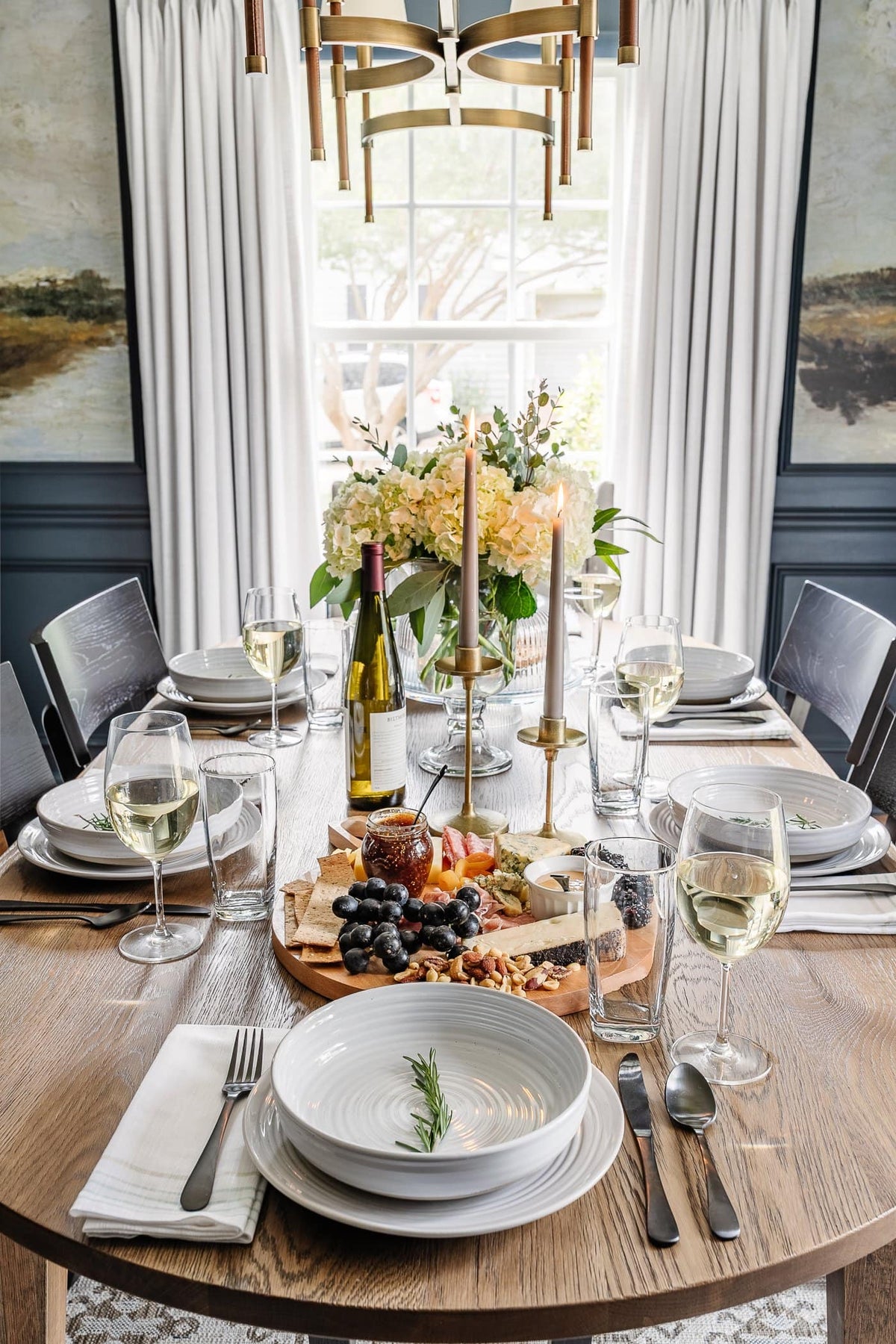
Dining Tables That Make Every Meal Feel Like an Occasion
The dining table is the room's central object — the piece everything else organizes around. It hosts breakfast, homework, dinner parties, and every meal in between. Choosing the right dining table is one of the highest-stakes furniture decisions in any home — the wrong size makes the room unusable, the wrong material makes maintenance miserable, and the wrong shape makes conversation difficult.
This guide covers every decision worth making: size, shape, material, and how to choose a table that works for daily life and special occasions simultaneously.

Size First: The Number That Overrides Everything
Before shape, before material, before style — the size of the dining table is determined by the size of the room. A table that's too large for the space makes the room dangerous to navigate and stressful to sit at. The clearance rules:
• Minimum clearance around the table: 36 inches from the table edge to the nearest wall or furniture. This is the absolute minimum for seated guests to push back chairs without hitting the wall. 48 inches is comfortable; 54 inches is ideal for high-traffic situations.
• Calculating maximum table size: measure the room, subtract the clearance from all sides, and the remaining rectangle is your maximum table size. For example: a 12 x 14 foot dining room minus 36 inches on all sides = 9 x 11 feet maximum table footprint.
How Many People Do You Actually Need to Seat?
|
Seating Goal |
Table Size (Rectangular) |
Table Size (Round) |
Notes |
|
2–4 people |
36–48" long |
36–42" diameter |
Suits small apartments and breakfast nooks |
|
4–6 people |
60–72" long |
48–54" diameter |
Most common residential size |
|
6–8 people |
78–84" long |
54–60" diameter |
Allows comfortable seating without crowding |
|
8–10 people |
90–96" long |
60"+ diameter |
Requires larger dining room; verify clearance |
|
10–12 people |
108–120" long |
Oval or rectangular at this size |
Allow 24" width per person minimum |
Shape: Round, Rectangular, or Oval
• Rectangular tables: the most common and most versatile shape. Works in most room proportions, accommodates the widest range of seating configurations, and pairs easily with benches on one or both sides.
• Round tables: the most democratic shape — everyone is equidistant from everyone else, which promotes conversation. Works best for four to six people; beyond that, the diameter becomes unwieldy. Best in square rooms where the circular form echoes the room's proportions.
• Oval tables: combines the conversation-friendly quality of a round table with the length of a rectangular one. Oval tables seat more people than their footprint suggests, because the rounded ends eliminate the dead corner space of rectangular tables. Works beautifully in long, narrow dining rooms where a rectangle would feel institutional.
Material Guide: What Holds Up Over Time
• Solid hardwood (oak, walnut, maple): the gold standard. Solid wood develops character with use, can be refinished when damaged, and lasts decades with reasonable care. The most expensive option; worth every dollar for the primary dining table.
• Wood veneer over engineered wood: looks like solid wood at a fraction of the cost. Cannot be refinished if the surface is damaged; less resilient to heavy daily use. Works well in lower-traffic dining rooms.
• Marble or stone top: the most visually striking option. Requires sealing and more careful maintenance than wood. Genuinely cool to the touch (useful for pastry; less comfortable for long winter dinners). Best as a statement piece in a room where the table is used less intensively.
• Metal with wood or stone top: durable, easy to clean, and available in a wide range of aesthetic directions. The metal base with a contrasting top (wood on black metal, marble on brass) is the most popular contemporary approach.
• Live edge wood: a single slab of wood with the natural edge preserved. Genuinely unique and deeply personal; no two are identical. Best for rooms where the table is the central design statement.
|
The Extension Table Compromise If you regularly entertain but don't want a large table dominating the room daily, an extension table — one with a leaf or leaves that add length when needed — is worth serious consideration. The trade-off: extension mechanisms add mechanical complexity and a seam that's visible in the top. The best extension tables have self-storing leaves (the leaf stores inside the table when not in use), a seam that runs along the grain of the wood (less visible), and a locking mechanism that holds the extended position securely. |
How to Style a Dining Table for Daily Use and Occasions
• Centerpiece rule: keep permanent centerpieces below 12 inches or above 24 inches. Between those heights they block eye contact across the table. A low ceramic bowl of fruit, a flat tray with candles, or a tall vase with dramatic height — never the awkward middle.
• Table linens: a runner rather than a full tablecloth is the most functional daily option. It protects the table surface, defines the centerpiece zone, and adds color and texture without the formality of a full cloth.
• Chair relationship: the chairs are as visible as the table. Mismatched chairs done intentionally — different styles in the same wood tone, or upholstered chairs at the heads with wood chairs on the sides — is the designer approach.
Browse S.W. Home's home decor and dining collection for serveware, textiles, and decorative objects that complete any dining table.
|
Complete Your Dining Room With S.W. Home Serveware, textiles, and home decor selected to make every meal feel considered. Browse the S.W. Home collection. |
