

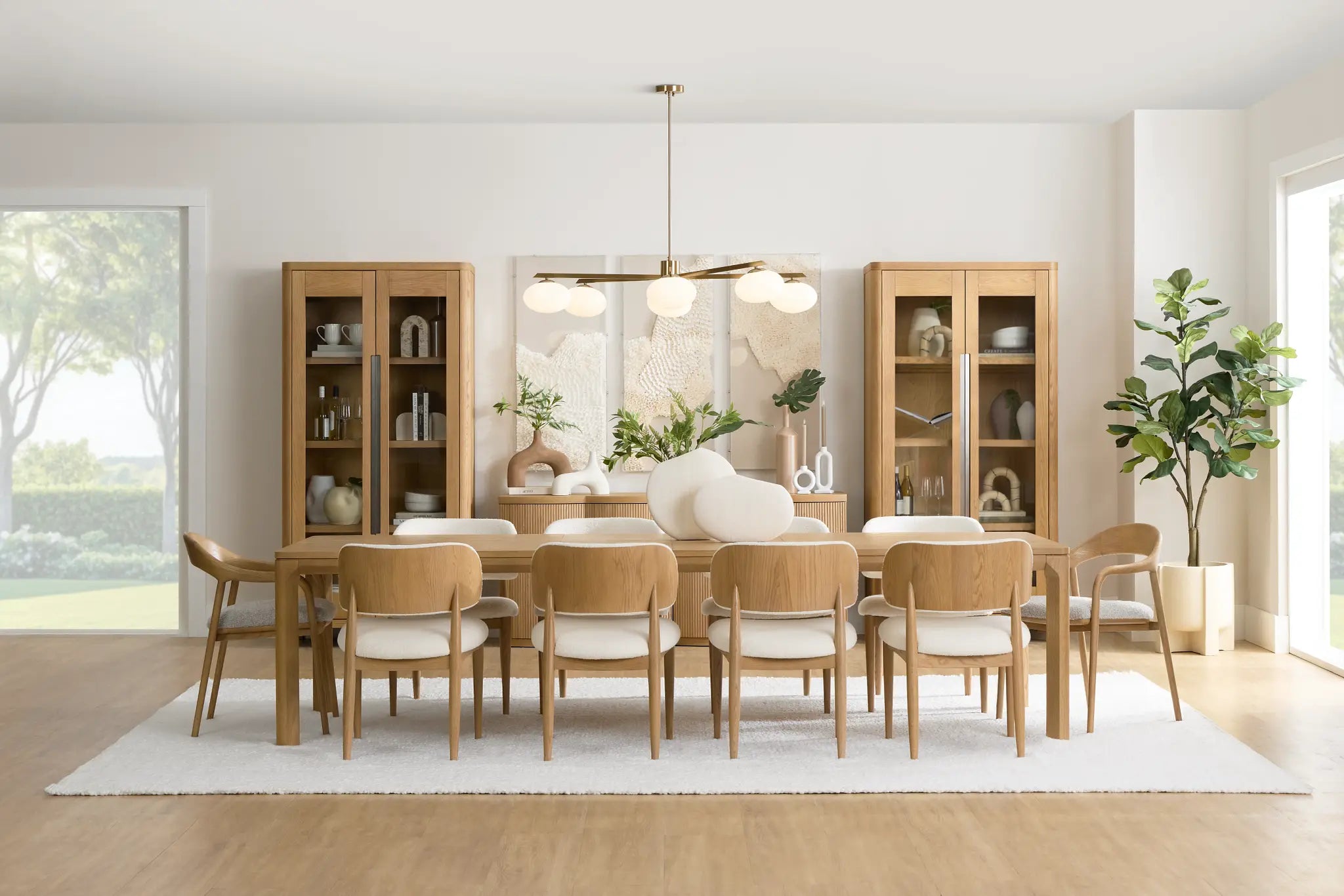
Dining Chairs That Balance Style and Comfort
Dining chairs are one of the most used pieces of furniture in any home — and one of the most frequently compromised on. People spend weeks choosing the right dining table and then rush the chair decision, ending up with seats that look fine in photos but feel wrong every single meal.
Getting dining chairs right means balancing three things simultaneously: how they look, how they feel, and how they work with everything else in the room. This guide breaks down every factor worth considering — from seat height to material to the art of mixing chair styles — so you can make a decision you'll still be happy with in ten years.
Comfort First: What Actually Makes a Dining Chair Comfortable
Style is visible from across the room. Comfort is felt every time someone sits down. If the chairs aren't comfortable, the table stops being a place people want to linger — and that defeats the entire purpose of a dining room.
These are the comfort factors that matter most:
• Seat height. Standard dining tables sit between 28 and 30 inches tall. Chair seat height should be 17 to 19 inches to give comfortable clearance. Always verify the table-to-chair gap — you want 10 to 12 inches between the seat and the tabletop underside.
• Seat depth. A seat that's too shallow (under 15 inches) feels perched. Too deep (over 20 inches) and shorter guests can't sit back comfortably. The sweet spot is 16 to 18 inches for most adults.
• Back height and angle. A straight vertical back looks clean but fatigues quickly over a long meal. A slight backward recline — even just a few degrees — makes an enormous difference in how long a chair stays comfortable.
• Armrests. Arm chairs at a dining table add comfort for long dinners but need clearance to slide under the table. Measure the table apron height before committing to arm chairs — many won't clear it.
• Padding and upholstery. Upholstered seats are the most comfortable for extended sitting. Solid wood and metal seats fatigue quickly without a cushion. If you love the look of a hard-seat chair, add a tied cushion — it transforms the experience.
Style Second: Matching Chairs to Your Dining Room
Dining chairs have to do something visually demanding: they need to complement the table, work with the room's overall aesthetic, and — ideally — bring some personality of their own. That's a lot to ask of a single piece of furniture.
The most reliable approach is to treat the table and chairs as a system rather than a matched set.
|
The Designer's Approach: Intentional Mismatching Matched dining sets — where table and chairs come from the same collection — are the safe choice. They're also the least interesting one. Designers almost always mix, and the results look far more curated: • A wood table with upholstered chairs in a complementary tone — the softness of the fabric balances the hardness of the wood • Two arm chairs at the heads of the table and four side chairs along the sides — classic hierarchy that looks intentional • A bench on one side, chairs on the other — casual and space-efficient, especially in a narrow dining room • Chairs in two different finishes of the same material — e.g., natural oak and dark walnut — for collected rather than catalog The unifying thread can be material, silhouette, color, or leg style. As long as one element connects them, the mix reads as designed. |
Dining Chair Styles: A Complete Breakdown
Here's how the most common dining chair types compare across comfort, durability, style fit, and practical use:
|
Chair Type |
Comfort Level |
Durability |
Best Style Fit |
Notes |
|
Upholstered |
High |
High |
Any |
Best for long meals and everyday use |
|
Wood (solid) |
Low–Medium |
Very High |
Traditional, Farmhouse, Scandinavian |
Pairs well with cushions for added comfort |
|
Metal / Industrial |
Low |
Very High |
Modern, Industrial, Eclectic |
Lightweight, easy to move, mix well with others |
|
Rattan / Woven |
Medium |
High |
Coastal, Bohemian, Organic Modern |
Adds texture; best in casual dining spaces |
|
Acrylic / Lucite |
Low |
High |
Contemporary, Glam, Minimalist |
Visually lightweight — great for small spaces |
|
Bench seating |
Medium |
High |
Farmhouse, Modern, Transitional |
Space-efficient; works one side of table only |
Material Guide: What Holds Up and What Doesn't
Material choice affects how a chair looks, how it feels, and how much maintenance it requires. Here's what to know before committing:
• Solid wood. The most durable dining chair material by a wide margin. Hardwoods like oak, walnut, and beech hold up to daily use for decades. Avoid engineered wood or MDF in chair frames — joints fail under repeated stress.
• Upholstered fabric. Adds warmth and comfort but requires more care. Performance fabrics (boucle, velvet with a synthetic blend, treated linen) resist staining far better than untreated natural fibers. For households with children, look for fabrics rated for high rub counts — 30,000 or above.
• Leather and faux leather. Easy to wipe clean, develops character over time (genuine leather), and works across a wide range of styles. Full-grain leather is the most durable; bonded leather peels within a few years and is worth avoiding.
• Rattan and woven. Beautiful but more fragile than wood or metal. Best in lower-traffic dining situations. Keep away from direct sunlight, which dries and cracks natural rattan quickly.
• Metal. Powder-coated steel and aluminum frames are extremely durable and easy to clean. The aesthetic is more industrial or contemporary, and comfort depends entirely on whether the seat is padded.
How Many Chairs Do You Actually Need?
The standard recommendation is to allow 24 inches of table width per person for comfortable seating. Use that to work backward from your table size:
• 60" round table: seats 4 comfortably, 6 in a pinch
• 72" rectangular table: seats 6 comfortably, 8 with end chairs
• 84" rectangular table: seats 6–8 comfortably depending on chair width
• 96" rectangular table: seats 8 comfortably, 10 with slimmer chairs
Buy for the number of people you seat regularly, not the number you seat at holidays. Overcrowding a table for daily use sacrifices comfort every meal. For occasional overflow, a set of folding chairs stored out of sight is a more practical solution than permanent overcrowding.
|
Getting the Proportions Right Two measurements to verify before purchasing any dining chair: • Table height minus chair seat height = 10 to 12 inches (the ideal clearance for comfortable seated posture) • Table apron height (the underside of the table frame) must clear the arm height of any arm chair — measure this before ordering arm chairs Most chair brands include seat height in their specs. If the table apron measurement isn't listed, contact the retailer before buying arm chairs — it's a common and expensive mistake. |
How to Style the Dining Room Around Your Chairs
Chairs are chosen to work with a table, but the dining room as a whole needs to hold together. A few principles that apply regardless of the chair style you choose:
• Rugs: A dining rug should extend at least 24 inches beyond each side of the table so chairs remain on the rug when pulled out. A rug that's too small makes the table look stranded.
• Lighting: A pendant or chandelier centered over the table should hang 30 to 36 inches above the tabletop for a standard 8-foot ceiling. Lower ceilings need lower fixtures.
• Wall decor: Art in a dining room is most effective at eye level when seated — slightly lower than the standard 57-inch rule. One large piece anchors a dining wall far better than several small ones.
• Table accessories: A centerpiece should allow eye contact across the table — keep it below 12 inches or dramatically tall (above 24 inches) to avoid blocking sightlines.
The dining room is one of the few spaces in a home where design decisions directly affect the quality of time spent together. Chairs that are uncomfortable cut meals short. A room that feels pulled together makes people want to stay. It's worth getting both right.
Browse the full S.W. Home dining and home decor collection for pieces designed to work together — from the table to the kitchen accessories that finish the room.
|
Build a Dining Room Worth Gathering In S.W. Home carries dining furniture and home decor selected to work together — pieces built for real life and styled for the room you actually want. Browse the full collection and find what belongs at your table. |
