

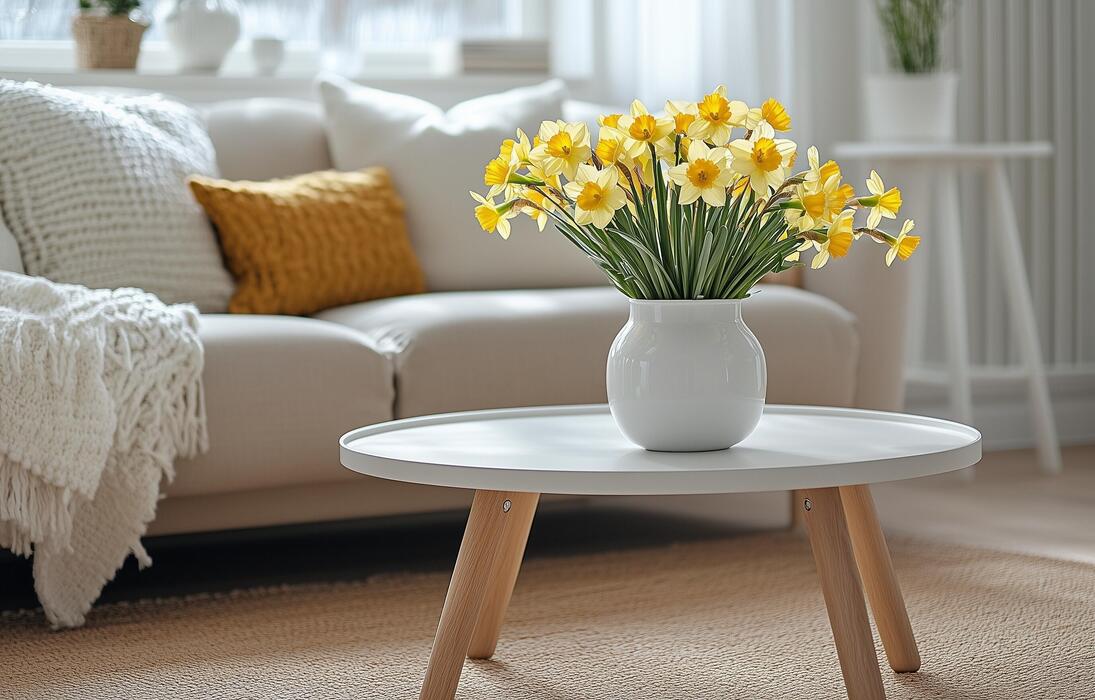
Decorative End Tables vs. Side Tables: Making the Right Call for Every Spot
The search decorative end table vs side table is one of the most specific furniture questions people type into Google — and one of the least well-answered. Most results give you broad overviews of table styles without addressing the actual distinction. This guide answers the question directly: what is the real difference, when does it matter, and which one do you actually need for each specific spot in your room?

The Actual Difference (It's Simpler Than You Think)
End table: a table placed at the end of a sofa — specifically at the arm of a sofa, where the sofa terminates. The defining characteristic is position, not appearance. An end table can be square, round, rectangular, or sculptural.
Side table: the broader category — any small table placed beside a seat to provide a functional surface. End tables are a subcategory of side tables. All end tables are side tables; not all side tables are end tables.
Decorative end table: a table that prioritizes visual interest as much as function. Rather than a straightforward flat surface on four legs, a decorative end table might have a sculptural base, an unusual material combination, an organic form, or a distinctive silhouette. The 'decorative' qualifier signals that the table is meant to contribute visually to the room rather than simply serve the seat beside it.
The practical implication: when someone searches for a 'decorative end table,' they're looking for a piece that functions as an end table while also doing design work — contributing to the room's aesthetic in a way that a standard rectangular table doesn't.
The Height Rule: The One Dimension That Overrides Style
Before any decorative decision, the height of the table relative to the seat beside it determines whether the piece works functionally. The rule is consistent:
The table surface should sit within two inches of the seat arm height — either above or below.
|
Seat Type |
Typical Arm Height |
Ideal Table Height |
Decorative Options |
|
Standard sofa |
23–25" |
22–26" |
Pedestal, sculptural base, mixed-material, organic form |
|
Low / mid-century sofa |
18–22" |
18–23" |
Low pedestal, drum table, rattan, ceramic base |
|
Deep sectional |
20–26" |
Measure specifically |
Any form — verify height before buying |
|
Armchair / accent chair |
24–28" |
24–28" |
C-table, round pedestal, nesting tables |
|
Bedroom (queen mattress) |
~25" |
24–28" |
Drum table, sculptural nightstand, pedestal |
When a Decorative End Table Is Worth the Extra Consideration
A standard rectangular end table on four legs serves its function. A decorative end table serves its function and does something more. It's the right choice when:
• The sofa is neutral and needs a point of interest. A plain sofa in a neutral fabric benefits from a table beside it that has visual personality — an interesting base material, an unusual silhouette, a mixed-material construction.
• The room is already cohesive and needs an accent. When the major pieces — sofa, rug, coffee table — are all working together well, a decorative end table at one end adds the element of surprise that keeps the room from reading as too matched.
• The corner needs to do double duty. A decorative end table with shelf storage, a tiered design, or a sculptural base serves as a display surface and a room accent simultaneously.
• You're mixing styles intentionally. A modern sofa with a rattan or ceramic-base end table introduces a contrasting material that makes both pieces more interesting.
The Best Decorative End Table Forms and What Each Does
|
Form |
Visual Character |
Best Pairing |
Notes |
|
Pedestal (single column) |
Sculptural, light, 360° appeal |
Any sofa or chair |
Most space-efficient; great for tight spots |
|
Drum / cylinder base |
Substantial, grounded, classic |
Traditional, transitional rooms |
Provides storage option if hollow |
|
Hairpin legs |
Minimal, graphic, mid-century |
Modern, Scandinavian, mid-century rooms |
Shows legs — ensure rug doesn't obscure them |
|
Rattan or woven |
Organic, textural, casual |
Coastal, bohemian, organic modern |
Adds texture other materials can't provide |
|
Ceramic or terracotta base |
Earthy, handmade, distinctive |
Organic modern, eclectic |
Fragile — position away from high-traffic paths |
|
Brass or metal frame |
Sleek, modern, warm accent |
Contemporary, transitional |
Pair with stone or glass top for contrast |
|
The Nesting Table as a Decorative Solution Nesting tables — two or three tables of graduated sizes that store under each other — solve both the decorative and practical end table challenge simultaneously. At full extension they function as an end table plus an additional surface. Nested together they take up the footprint of one table. For rooms that transition between everyday use and entertaining, nesting tables at one or both ends of the sofa are worth serious consideration — and the graduated size relationship between pieces creates its own decorative effect. |
Matching vs. Mismatching: Which to Choose
Matching end tables on either side of a sofa is the traditional approach. It creates symmetry, reads as formal, and works particularly well in traditional and transitional rooms. Intentional mismatching — different decorative end tables that share one connecting element (material, finish, or height) — reads as collected and personal.
The connecting element can be subtle:
• Both tables have brass hardware or detailing
• Both are roughly the same height despite different forms
• Both use natural materials (one wood, one rattan — but both organic)
• Both sit in the same warm tone family despite different shapes
Browse home decor and accent furniture at S.W. Home — decorative objects and textiles that complete any seating arrangement.
|
Find the Right Table at S.W. Home Home decor, accent pieces, and accessories for every room. Browse the S.W. Home collection and find what belongs beside your sofa. |
