

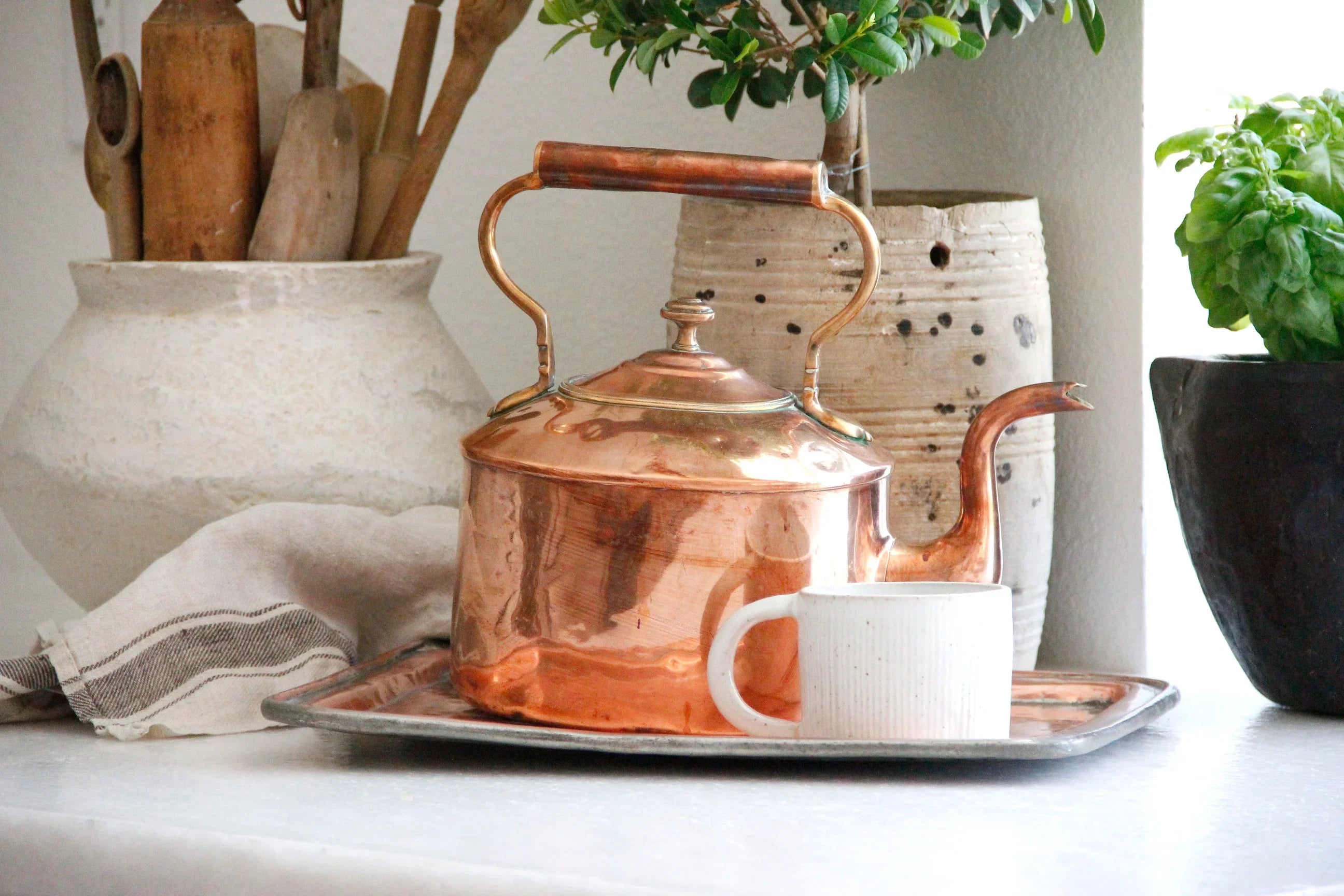
Copper Tea Kettles: Why They're Worth It and How to Choose the Right One
A copper tea kettle is one of those kitchen objects that earns its place twice — first as a functional tool, then as a piece of the kitchen's visual identity. The warm tones of copper on a stovetop, the patina that develops over years of use, the weight and presence of a well-made metal object — these are qualities that a stainless steel or plastic kettle simply doesn't have.
This guide covers what makes copper kettles worth buying, how they compare to other materials on performance, what the maintenance commitment looks like, and how to choose one that will still look beautiful in a decade.

Why Copper? The Functional Case
Copper is the best heat conductor of any metal used in kitchenware — approximately 25 times more heat-conductive than stainless steel. In a tea kettle, that matters in a few specific ways:
• Faster heating: copper transfers heat from the burner to the water more efficiently, which means a meaningfully faster boil time compared to stainless steel.
• Even heat distribution: the high conductivity means heat distributes across the bottom and sides of the kettle without hot spots, which produces a more consistent boil.
• Responsive to temperature changes: copper heats and cools quickly. On a gas stovetop especially, this responsiveness gives you better control over heat level than slower-conducting materials.
The one functional trade-off: copper reacts with acidic substances and requires a lined interior for food-safe use with water. Any copper kettle worth buying for actual use should have a tin or stainless steel-lined interior. An unlined copper kettle is decorative only.
Copper vs. Other Kettle Materials
|
Material |
Heat Conductivity |
Durability |
Maintenance |
Aesthetic |
|
Copper (lined) |
Excellent |
Very high |
Polishing required |
Warm, distinctive, ages beautifully |
|
Stainless steel |
Good |
Very high |
Minimal |
Neutral, functional, modern |
|
Cast iron (enamel) |
Moderate |
Excellent |
Low |
Traditional, heavy, excellent heat retention |
|
Ceramic / glass |
Poor |
Moderate |
Easy |
Decorative; fragile under thermal stress |
|
Aluminum |
Good |
Moderate |
Minimal |
Lightweight; less aesthetic character |
The Aesthetic Case: Copper in the Kitchen
Beyond performance, copper brings something to a kitchen that no other material quite replicates. Its warm reddish-gold tone sits in the same color family as natural wood, aged brass, and terracotta — all materials associated with the warm, organic kitchen aesthetic that's dominated design for the past several years.
On an open shelf or stovetop, a copper kettle functions as a decorative object as much as a kitchen tool. It's one of the few functional items that gets better-looking over time: the natural patina that develops on an unlacquered copper kettle gives it depth and character that a new piece doesn't have.
|
Lacquered vs. Unlacquered Copper: Which to Choose • Lacquered copper: maintains the bright polished finish indefinitely without any effort. The trade-off is that if the lacquer chips or wears through, the appearance becomes inconsistent and the kettle needs professional re-lacquering. Good choice if you want the bright copper look with zero maintenance. • Unlacquered copper: develops a natural patina over time — a softer, darker tone with depth and variation that many people find more beautiful than the bright finish. Requires occasional polishing if you want to maintain the bright look, or no maintenance if you prefer the aged patina. The more interesting long-term choice for most people. |
What to Look for When Buying a Copper Tea Kettle
• Interior lining: non-negotiable for safe use. Tin lining is traditional (needs re-tinning every 20–25 years with heavy use); stainless steel lining is more durable and requires no maintenance.
• Handle material: solid brass or wrought iron handles outlast and out-perform plastic or thin metal. The handle should feel balanced and substantial in the hand.
• Lid fit: a tightly fitted lid holds heat better and prevents the lid from rattling or lifting at a full boil. Test the fit if buying in person.
• Spout design: a gooseneck spout provides precision pouring for pour-over coffee and loose-leaf tea; a standard wide spout pours faster but with less control. Choose based on your primary use.
• Base compatibility: copper kettles work on gas and electric stovetops. For induction, you need a kettle with an induction-compatible base plate — most standard copper kettles are not induction-compatible without a specific base.
• Capacity: 1.5 to 2 liters serves one to four cups; larger capacities suit households that brew frequently or in quantity.
Caring for a Copper Kettle
Copper kettles require more care than stainless steel — but the maintenance ritual is simple once established:
• Exterior polishing: a mixture of lemon juice and salt, or a commercial copper polish, removes tarnish and restores the bright finish. How often depends on your preference for patina vs. shine.
• Interior cleaning: rinse with warm water after each use. For mineral buildup, fill with a water-and-white-vinegar solution, bring to a boil, let cool, and rinse thoroughly.
• Storage: store with the lid off or ajar to allow air circulation and prevent musty odors from developing inside.
• Avoid: dishwashers (the harsh detergent strips lacquer and damages the exterior finish), abrasive scrubbers on the exterior, and leaving water sitting inside for extended periods.
A copper tea kettle is one of the kitchen objects that rewards deliberate choice. Find complementary kitchen accessories and home decor at S.W. Home — pieces selected to work in kitchens where quality and aesthetic both matter.
|
Shop Kitchen Accessories at S.W. Home S.W. Home carries home accessories, kitchen decor, and decorative objects hand-picked for quality and lasting beauty. Find what belongs in your kitchen. |
