

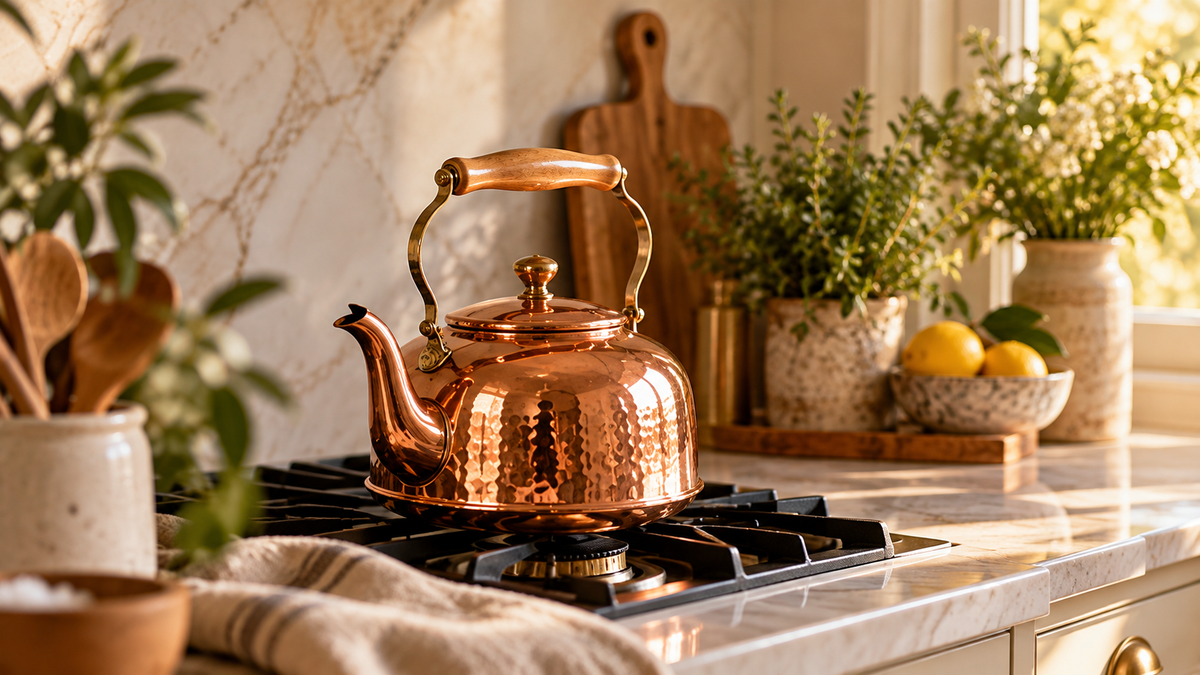
Copper Tea Kettle: The Complete Guide

A copper tea kettle is one of the most distinctive objects in a kitchen — warm-toned, immediately recognizable, and carrying centuries of practical history behind its form. If you've been searching copper tea kettle and wondering what actually sets copper apart from stainless or enamel, this guide answers every question: what copper does, what to look for when buying, how to use it properly, and how to keep it looking its best for years.
What Makes Copper Different
Copper is the most thermally conductive common metal used in cookware and kettle-making. It heats faster than stainless steel, cast iron, or enamel — meaning water comes to temperature more quickly and the exterior of the kettle stays warm to the touch longer after the heat source is removed.
That thermal conductivity is the functional argument for copper. The aesthetic argument is equally strong: the warm reddish-gold tone of polished copper is distinctive in a way no other kettle material replicates.
|
Property |
Copper vs. Stainless |
|
Heat conductivity |
Copper is ~25x more conductive than stainless steel |
|
Weight |
Copper is heavier — substantial, quality feel |
|
Appearance |
Warm reddish-gold; develops patina over time |
|
Maintenance |
Requires periodic polishing; stainless is lower maintenance |
|
Price |
Higher — reflects material and craftsmanship |
|
Lifespan |
Decades with proper care |
The Benefits of a Copper Tea Kettle
• Faster heat-up: Heats faster than stainless, enamel, or glass kettles
• Counter presence: The reddish-gold tone warms any kitchen palette and reads as intentional, collected kitchenware
• Longevity: A quality copper kettle lasts decades — it's a purchase made once
• Patina over time: Copper develops a natural patina (verdigris) that many owners prefer to the original polish
• Natural antimicrobial quality: Copper's antimicrobial properties have been recognized for centuries — relevant for a vessel that holds water
Is a Copper Kettle Dog Friendly?
This is a genuinely common question — and the answer is yes, with the same common sense that applies to any hot object in a home with pets. A copper kettle on a stovetop or counter poses no specific risk to dogs beyond the obvious: hot surfaces, steam, and boiling water require the same attention around pets as around children.
The copper itself is not toxic to dogs in normal kettle use. Copper toxicity in dogs is associated with ingestion of copper compounds — not incidental contact with a copper vessel. Keep the kettle out of reach when not in use (standard practice), and there is no meaningful pet-safety concern.
What "Copper Kettle" Means — and Its History
The phrase "bright copper kettles" has cultural resonance beyond the kitchen — it appears in one of the most recognizable songs from The Sound of Music as a symbol of comfort and simple pleasures. A copper kettle has been a domestic fixture across cultures for centuries: in Japanese tea ceremony, in British cottage kitchens, in Moroccan mint tea preparation.
The meaning of a copper kettle in the home has always been the same: warmth, craft, and the daily ritual of something heated slowly and poured with care.
How to Choose a Copper Tea Kettle
• Material: Fully copper body (not copper-plated) with a stainless or tin-lined interior — copper should not contact acidic water directly
• Wall thickness: At least 1.5mm wall thickness. Thin copper dents easily and conducts heat unevenly
• Handle: Stays cool during boiling — look for heat-resistant material or a looped copper handle that stays manageable
• Lid and spout: A tight-fitting lid prevents steam loss and spitting during boil; a gooseneck spout gives pour control
• Base: Flat-bottomed for electric and induction; any base for gas and ceramic
Caring for a Copper Tea Kettle
• Empty after use: Empty the kettle after every use — standing water causes interior mineral buildup and exterior water spots
• Dry immediately: Wipe the exterior dry after each use to prevent water spots
• Polish regularly: Polish with a copper-specific cleaner or a paste of lemon juice and salt to restore shine; always rinse thoroughly
• Embrace the patina: Copper develops a natural patina (darker, sometimes greenish-brown) over time. Many owners embrace this — others prefer polished copper. Both are legitimate choices
• Avoid abrasives: Never use abrasive scrubbers on the exterior — they scratch the surface
|
Find copper tea kettles and kitchen accessories at S.W. Home → shopswhome.com |
