

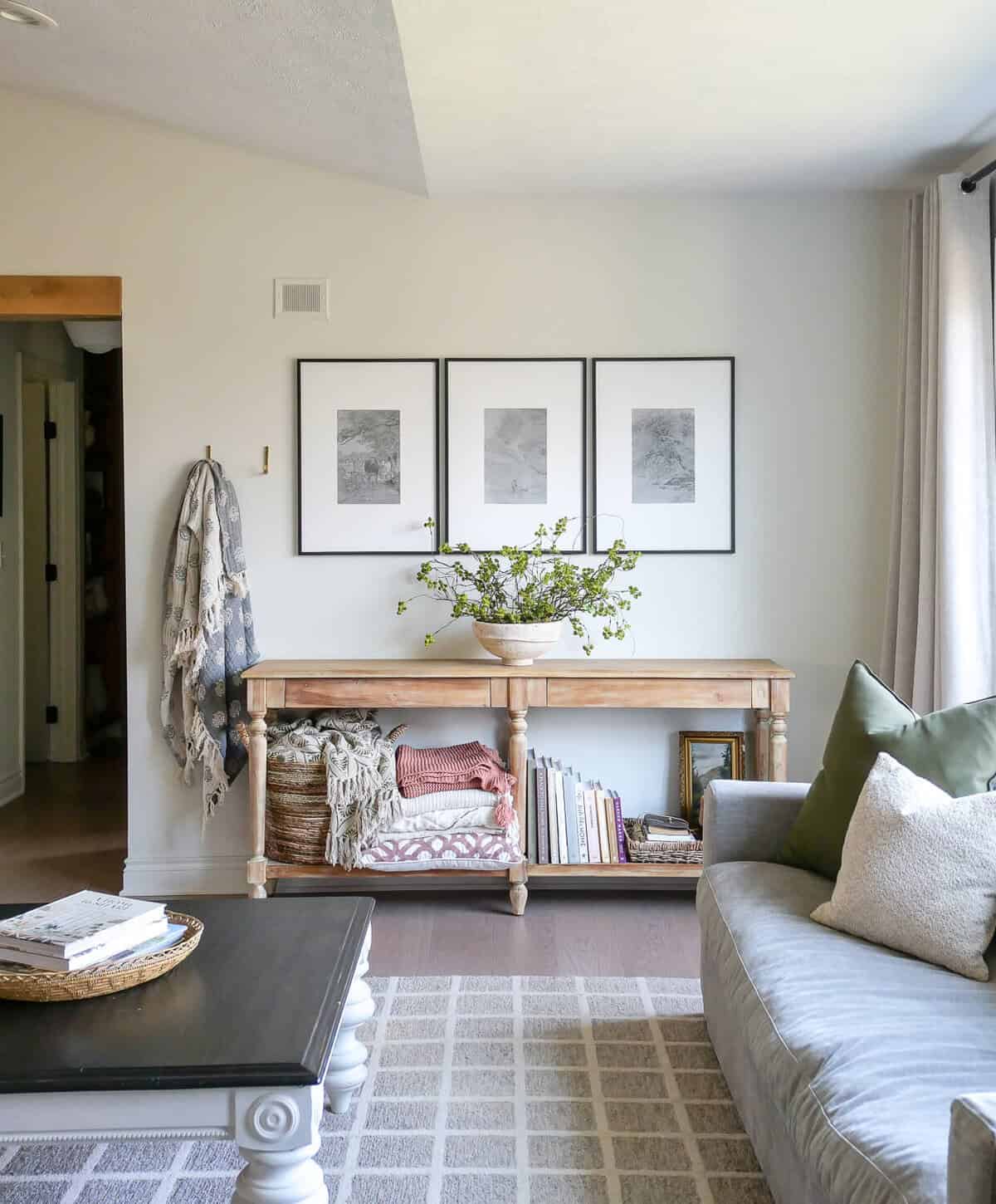
Console Tables 101: How to Style an Entryway From Scratch
The console table is the first piece of furniture most people encounter when they walk into a home — and the last they see when they leave. It sets every expectation about what the rest of the house will be like. Done well, a console table transforms a transitional space into a genuine design moment. Done poorly, it becomes a dumping ground for keys, mail, and things that don't have anywhere else to go.
This is the complete guide to console tables: how to size them, where to place them, which styles work in which contexts, and how to style the surface so it holds its own as the focal point of an entryway.

What Is a Console Table (and What It Isn't)
A console table is a long, narrow table — typically 10 to 16 inches deep — designed to sit against a wall rather than in the center of a room. The narrow depth is what distinguishes it from a dining table or sideboard, and it's what makes it work in tight spaces like entryways, hallways, and behind sofas.
It's distinct from a sideboard (which is deeper, typically has storage, and lives in dining rooms) and from a sofa table (which is placed behind a floating sofa and seen from both sides). A console table is specifically wall-adjacent.
Sizing: The Numbers That Matter
|
Dimension |
Standard Range |
Ideal Rule |
Notes |
|
Height |
28–36" |
Match counter or adjacent surface height |
32" is the most versatile standard |
|
Depth |
10–16" |
No more than 14" in narrow entries |
Deep consoles block traffic in tight spaces |
|
Length |
24–72" |
No more than 2/3 of the wall width |
Oversized console makes wall feel small |
|
Mirror above |
Width = 50–80% of table length |
Centered above table |
Leave 6–12" between table top and mirror bottom |
The single most important sizing rule: the console table should never be more than two-thirds the width of the wall it occupies. A table that spans the full wall makes the entry feel narrow and institutional.
Placement Options Beyond the Entryway
Console tables are most associated with entryways, but they work in several other contexts:
• Behind a floating sofa. A console table placed directly behind a sofa that floats in the middle of a room defines the back of the seating arrangement, provides a lamp surface, and creates a layered visual anchor. Height should match or sit just below the sofa back.
• In a hallway. A narrow console (10–12" deep) can work in any hallway wide enough to allow 36" of clear walking path after the table is placed. It provides a surface for functional objects and a visual anchor in what's otherwise a transitional non-space.
• In a dining room as a sideboard substitute. A console table along one wall of a dining room serves the display and serving functions of a sideboard without the visual bulk. Works best in smaller dining rooms where a full sideboard would overwhelm the space.
• In a bedroom as a desk alternative. A console table at 30" height works as a minimalist desk in a bedroom — narrow enough not to dominate the space and deep enough to hold a laptop and a lamp.
|
The Mirror Rule for Entryway Console Tables Hanging a mirror above a console table is the classic entryway formula — and it works for good reasons: the mirror bounces light into what's often a dark entry, makes the space feel larger, and provides a functional surface for a last-look before leaving. The sizing rule: the mirror should be 50–80% the width of the table below it. A mirror that's as wide as or wider than the table looks overwhelming. One that's too narrow floats without connection. Hang the mirror so its bottom edge sits 6–12" above the table surface. Lower and objects on the table crowd it. Higher and the visual connection between table and mirror is lost. |
Console Table Styles and Where They Work
|
Style |
Key Characteristics |
Best Setting |
Pair With |
|
Solid wood |
Warm tone, substantial |
Traditional, transitional, farmhouse |
Antique mirror, ceramic lamp, botanicals |
|
Metal + wood |
Light base, warm top |
Modern, contemporary, industrial |
Geometric mirror, sculptural object |
|
Painted wood |
Crisp finish, versatile color |
Any style depending on color |
Simple mirror, ceramic vase, artwork |
|
Marble or stone top |
High-impact, sophisticated |
Glam, contemporary, eclectic |
Gold mirror, sculptural lamp, minimal objects |
|
Rattan / woven |
Casual, organic texture |
Coastal, bohemian, organic modern |
Round mirror, dried botanicals, woven basket |
|
Lucite / acrylic |
Visually lightweight, modern |
Small entries, contemporary |
Simple mirror, one bold object |
How to Style a Console Table
The console table surface is one of the most visible styled surfaces in any home. The rules that make it work:
• The lamp is almost always right. A table lamp at one end of the console brings light to the entry, provides height, and anchors the arrangement. Choose a scale appropriate to the table length — a lamp that's too small on a long console looks lost.
• Work in zones. Divide the table into two zones — style one, leave one with breathing room. A lamp and two to three objects on one side, a single object or clear surface on the other, reads as curated.
• Vary heights. Lamp (tall) + medium object (vase, small framed print, plant) + low object (tray, books, ceramic bowl). The variation in height creates visual movement.
• Add one living element. A small plant, a single stem, dried botanicals — something organic in the arrangement prevents it from reading as static.
• Contain the functional objects. A tray or small bowl to hold keys, coins, and daily essentials contains the clutter that naturally accumulates in an entry without letting it become visual noise.
Find console table styling objects in the S.W. Home home decor collection — decorative objects, textiles, and accent pieces selected to work in real entryways and living rooms.
|
Style Your Entry With S.W. Home Home decor, accent objects, and textiles hand-picked for quality and lasting style. Find what belongs in your entryway. |
