

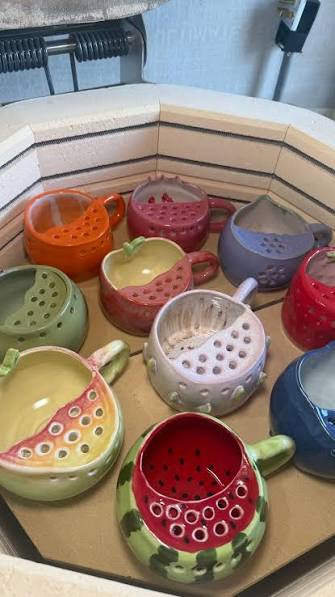
Ceramic Berry Bowls: Why They're the Most Useful Thing You're Not Using
A ceramic berry bowl is one of those kitchen objects that looks purely decorative until you understand what it actually does — and then you wonder how you ever washed fruit without one. The perforated ceramic design isn't aesthetic; it's functional engineering that happens to look beautiful. This guide explains how berry bowls work, what separates a well-made one from a poor one, and how to use them in ways that go beyond the obvious.

How a Ceramic Berry Bowl Actually Works
The perforated sides and base of a ceramic berry bowl allow water to drain and circulate around the fruit while it rinses. This is genuinely different from washing fruit in a colander — the ceramic material stays cooler than metal, the enclosed form allows gentle tossing without fruit escaping, and the visual quality of the bowl means it can go straight from sink to table without transferring to a separate serving bowl.
The functional advantages:
• Rinse and serve in one vessel: fill with water, rinse, drain, and serve — the bowl is attractive enough to sit on the table or counter as a display piece between uses.
• Airflow keeps fruit fresher: the perforations allow airflow around the fruit even when stored, which slows moisture buildup and extends the window before fruit deteriorates.
• Cool ceramic surface: ceramic holds a cooler temperature than metal colanders, which is gentler on delicate berries and keeps rinsed fruit cooler for longer after washing.
• No transfer needed: the most underrated advantage. Any tool that eliminates a step — rinse here, move to serving bowl — reduces kitchen friction and dirty dishes simultaneously.
What to Look for in a Quality Ceramic Berry Bowl
Not all ceramic berry bowls are made with the same care. The markers that indicate quality:
• Glaze coverage on the perforations: the inside of each hole should be glazed, not raw clay. Unglazed clay inside perforations absorbs water, holds bacteria, and is harder to clean properly.
• Base drainage: a well-designed berry bowl has perforations in the base as well as the sides. A bowl that only drains at the sides traps standing water under the fruit.
• Weight and wall thickness: substantial walls indicate quality clay and proper kiln firing. A bowl that feels thin or light has been made with economy rather than longevity in mind.
• Glaze uniformity: the glaze should be consistent across the interior — no bare patches, no drips, no pinhole pitting that would trap food residue.
• Foot ring: a raised foot ring on the base allows drainage to happen underneath the bowl, keeps the bottom of the bowl from sitting in standing water, and makes it easier to pick up with wet hands.
|
Berry Bowl Type |
Best For |
Capacity |
Dishwasher Safe |
|
Small (5–6") |
One serving, individual use, counter display |
1–2 cups |
Usually yes — check manufacturer |
|
Medium (7–8") |
Family serving, most common size |
3–4 cups |
Usually yes |
|
Large (9–10") |
Entertaining, multiple types of fruit |
5–6 cups |
Check — large pieces vary |
|
With matching saucer |
Serving and transport, gifting |
Varies |
Usually yes |
Beyond Berries: How to Use a Ceramic Berry Bowl
The name limits the thinking. A ceramic berry bowl with its perforated sides works for any rinsing task and functions as a decorative object when not in active use:
• Grapes, cherry tomatoes, small plums: any small fruit that benefits from a rinse-and-serve approach.
• Fresh herbs: rinse a bundle of basil, parsley, or cilantro in the bowl; drain; and bring to the table for serving. The bowl's airflow keeps the herbs from going limp as quickly as a damp cloth or sealed container.
• Small vegetables: radishes, snap peas, cherry tomatoes for a crudité display — the bowl holds them beautifully after rinsing.
• Counter display: an empty berry bowl or one holding a loose arrangement of whole fruit (lemons, limes, small apples) functions as a kitchen counter decorative object. The perforations create an interesting visual texture even when the bowl holds nothing.
• Soap bar display in the bathroom: a small ceramic berry bowl as a soap holder in the bathroom is an unconventional but effective use — the drainage keeps bars from sitting in standing water.
|
The Pairing Opportunity: Berry Bowl and Confit Pot If you're building out a kitchen accessory collection with genuine visual coherence, pairing a ceramic berry bowl with a ceramic confit pot or garlic keeper in the same glaze family creates a matched set that reads as intentionally curated rather than randomly accumulated. Both objects are functional first — the berry bowl rinses fruit, the confit pot stores garlic or preserved goods in a sealed vessel — and decorative second. Objects that do both are the most valuable in any kitchen. |
Find ceramic berry bowls, kitchen accessories, and home decor at S.W. Home — functional objects selected for their beauty as much as their utility.
|
Shop Kitchen Accessories at S.W. Home Ceramic berry bowls, kitchen accessories, and home decor hand-picked for quality and lasting appeal. Browse the S.W. Home collection. |
