

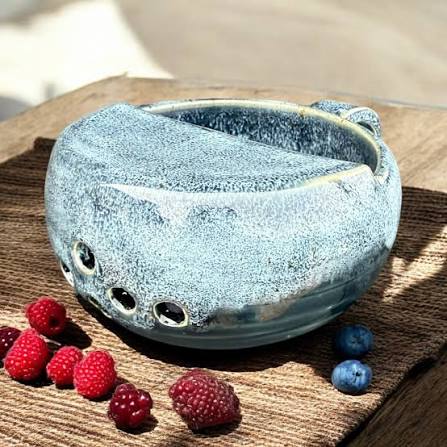
Berry Bowl Ceramic: Everything You Need to Know Before You Buy
If you've been searching berry bowl ceramic and wondering whether it's worth buying — it is. But the reason it's worth buying probably isn't the one you've been told. A ceramic berry bowl isn't just a prettier colander. It's a kitchen object that solves a specific problem elegantly, looks beautiful doing it, and works harder than its simple form suggests.
With nearly a thousand searches a month landing on this topic, it's clearly something people are actively seeking out. This guide gives you everything you need: exactly how a ceramic berry bowl works, the quality markers that separate a well-made piece from a disappointing one, how to choose the right size, and the uses beyond berries that make it one of the most versatile items on a kitchen shelf.

What a Ceramic Berry Bowl Actually Is
A ceramic berry bowl is a fired clay vessel with a perforated body — holes through the sides and base that allow water to drain and air to circulate. It's designed to rinse fruit directly in the bowl, then carry it straight to the table without transferring to a separate serving piece.
The combination of ceramic material and perforated form creates specific functional advantages that neither a solid ceramic bowl nor a metal colander fully delivers:
• Ceramic stays cooler than metal. A stainless steel colander conducts heat from the kitchen environment and your hands. Ceramic stays closer to ambient temperature, which is gentler on delicate berries and keeps rinsed fruit cooler between washing and serving.
• The enclosed form keeps fruit contained. A colander's open top means berries roll out during washing. A berry bowl's enclosed form — typically a sphere or deep oval with a narrow opening — keeps everything inside while you rinse and toss gently.
• It's table-ready. This is the feature most people appreciate most after buying: you rinse and go directly to the table. No second dish, no paper towel drain, no extra step. The bowl is attractive enough to serve from.
The Quality Markers That Matter
The ceramic berry bowl category includes everything from hand-thrown artisan pottery to mass-produced imports. The differences are visible and functional:
|
Quality Marker |
What to Look For |
Red Flag |
|
Interior glaze |
Smooth, complete glaze coverage inside all perforations |
Raw clay visible inside holes — harbors bacteria |
|
Base perforations |
Holes in the base as well as sides |
Sides only — water pools under fruit at the base |
|
Wall thickness |
Substantial walls with consistent thickness |
Thin, lightweight walls — cheap clay, poor kiln firing |
|
Foot ring |
Raised foot ring lifts base off counter surface |
Flat base sits in its own drainage water |
|
Glaze uniformity |
Even, consistent glaze across all surfaces |
Drips, bare patches, or pinhole pitting |
|
Hole pattern |
Regular, clean-edged perforations |
Rough or irregular edges — poorly tooled before firing |
Choosing the Right Size
Berry bowl ceramic pieces come in a range of sizes, and the right choice depends on your household's typical use:
• Small (5–6" diameter): individual servings, counter display with a small amount of fruit, rinsing herbs. Works well as a single-serve piece or displayed on an open shelf as a decorative object even when empty.
• Medium (7–8" diameter): the most practical size for most households. Holds two to three generous servings of berries, works for most fruit-washing tasks, and sits well on a counter or table.
• Large (9–10" diameter): family use, entertaining, or situations where you're washing a full pint or more at once. At this size the bowl becomes a visible presence on the counter — choose a glaze color you'd be happy seeing every day.
Beyond Berries: Unexpected Uses for a Ceramic Berry Bowl
The name constrains the thinking. A well-made ceramic berry bowl with solid construction and a complete interior glaze works across a surprising range of kitchen and home uses:
• Fresh herbs: rinse a bunch of basil, parsley, or cilantro in the bowl, shake to drain, and bring directly to the table or cutting board. The airflow keeps herbs from wilting as quickly as a damp cloth.
• Cherry tomatoes and grapes: any small round item that benefits from a contained rinse.
• Small vegetables: radishes, snap peas, small mushrooms — anything that needs a quick rinse before serving.
• Counter fruit display: an empty ceramic berry bowl or one holding a loose arrangement of whole fruit (lemons, clementines, small apples) functions as a kitchen display object. The perforated texture reads as visually interesting even without contents.
• Soap bar holder in the bathroom: a small berry bowl as a soap dish keeps bars lifted above standing water and adds a material note to the bathroom counter that elevates the entire space.
• Garlic storage: whole garlic heads stored in a berry bowl benefit from the same airflow that keeps fruit fresh. The perforations prevent the moisture buildup that shortens garlic's shelf life in a solid vessel.
|
The Ceramic Berry Bowl and Confit Pot Pairing If you're building out a kitchen accessory collection with genuine aesthetic coherence, pairing a ceramic berry bowl with a ceramic confit pot in the same glaze family creates a matched set that reads as thoughtfully curated. Both are functional first — the berry bowl rinses and serves, the confit pot stores — and decorative second. Objects that perform both roles are the most valuable in a working kitchen. A common glaze color or clay body connects them without requiring an identical shape. |
How to Care for a Ceramic Berry Bowl
• Hand wash is preferred: most ceramic berry bowls are technically dishwasher safe, but hand washing preserves the glaze finish longer and lets you clean the perforations thoroughly with a soft brush.
• Use a soft brush on the holes: a small bottle brush or pastry brush reaches inside the perforations and removes any residue that a standard sponge misses. Do this weekly with regular use.
• Air dry completely before storing: the perforations mean the interior dries quickly, but ensure the base is fully dry before nesting or storing to prevent moisture transfer.
• Avoid thermal shock: don't move a ceramic bowl directly from the refrigerator to a hot dishwasher or sink. Rapid temperature changes can cause cracking, especially in thinner pieces.
Find ceramic berry bowls, kitchen accessories, and decorative objects at S.W. Home — functional objects selected for material quality and lasting visual appeal.
|
Shop Kitchen Accessories at S.W. Home Ceramic berry bowls, kitchen accessories, and home decor hand-picked for quality and lasting beauty. Browse the full S.W. Home collection. |
